A 15-Minute Daily Home Reset with a Clear Finish Line
A daily reset restores the places your household needs next: a usable kitchen surface, clear walking paths and belongings returned to reachable homes. Set a short time budget, choose those outcomes first and let the room-by-room sequence support them.

A daily reset restores the places your household needs next: a usable kitchen surface, clear walking paths and belongings returned to reachable homes. Set a short time budget, choose those outcomes first and let the room-by-room sequence support them.
Choose today’s three outcomes
| Household situation | Useful outcome | Small starting action |
|---|---|---|
| The morning will be rushed | Departure items are together | Put the bag and essential items at their departure point |
| Dinner left the kitchen blocked | One working surface is clear | Handle food and dishes before moving decor |
| Toys or shoes interrupt movement | The walking route is clear | Return obvious items along the route |
| Everyone is low on energy | Essential mess is contained | Remove food waste and put damp items where they can dry |
What Is a Daily Home Reset?
A daily reset is a short period—usually at the end of the day—when you return the home to a functional baseline.
The goal is not perfection. Instead, you focus on a few tasks with an immediate impact:
- Remove obvious clutter.
- Return everyday items to their places.
- Reset the kitchen.
- Prepare high-use spaces for the next day.
What a Short Daily Reset Can Accomplish
A short time limit prevents the routine from turning into an exhausting cleaning session. Fifteen focused minutes can make a noticeable difference when you work on the highest-impact tasks first.
It is also easier to repeat a small routine every day than to rely on occasional large cleanups.
Minute 1–3: Clear Visible Clutter
Start with the room you use most. Pick up cups, wrappers, papers, toys, clothing, and other items that are obviously out of place.
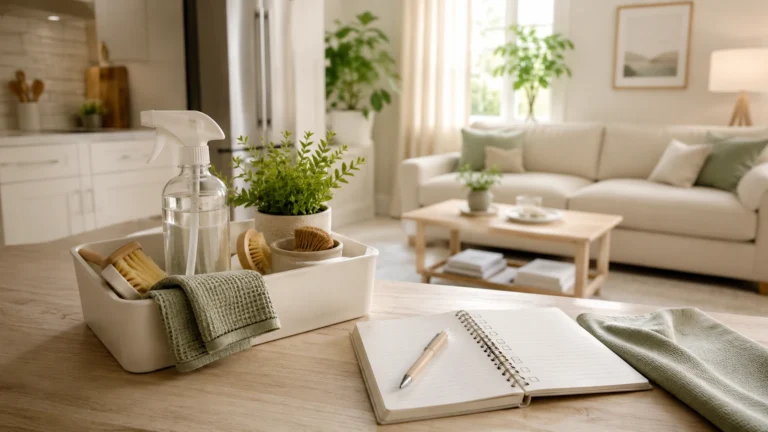
Carry a small basket if several items belong in different rooms. This prevents you from walking back and forth for every object.
Minute 4–6: Reset the Living Area
Restore the living room to a simple baseline:
- Arrange sofa cushions.
- Fold throws.
- Return remotes.
- Clear the coffee table.
- Put books or magazines back.
These small actions have a large visual effect because the living room is often one of the most visible areas in the home.
Minute 7–10: Reset the Kitchen
The kitchen can make the whole home feel messy when dishes and food items remain out.
Use a few minutes to:
- Load or arrange dishes.
- Put food away.
- Clear the main counter.
- Wipe obvious crumbs or spills.
- Place used towels or cloths where they belong.
If there is too much to finish in the time available, prioritize the sink and the largest clear work surface.
Minute 11–12: Gather Laundry and Shoes
Collect clothing that has been left in bedrooms, bathrooms, or living areas. Put dirty clothing in hampers and return clean items to the appropriate room.
Move shoes out of walkways and back to their normal storage location.
Minute 13–14: Prepare for Tomorrow
Use the next two minutes to remove one source of morning friction.
You might:
- Place keys and bags near the door.
- Clear your work area.
- Set out something needed in the morning.
- Check that the kitchen is ready for breakfast.
- Put a necessary item on your reminder list.
Minute 15: Do a Final Walk-Through
Walk through the main areas of your home and fix one or two things that stand out.
Then stop. The time limit matters because the routine needs to remain easy enough to repeat tomorrow.
What Not to Do During a Daily Reset
A reset can lose its purpose if you begin larger projects. Avoid:
- Organizing a drawer
- Deep-cleaning the bathroom
- Sorting an entire closet
- Reading paperwork
- Starting a major decluttering project
If you notice a task that needs more time, write it down and handle it during a dedicated cleaning or organizing session.
How to Make the Routine Easier
Keep a basket for misplaced items
A small basket makes it easy to gather things that need to move to another room.
Give common clutter a home
If the same items repeatedly appear on counters or tables, the storage location may be inconvenient. Consider giving them a simpler, closer home.
Reset at the same time each day
Link the routine to an existing habit, such as after dinner or before your evening relaxation time. A consistent trigger makes the routine easier to remember.
Use a visible timer
A timer keeps the task focused and reinforces that you only need to work for a short period.
A Five-Minute Version for Busy Days
Some days will not allow a full 15-minute reset. On those days, do only this:
- Clear the kitchen sink.
- Remove obvious trash.
- Pick up the living room floor and main surfaces.
- Put dirty laundry in hampers.
- Prepare one thing for tomorrow.
A short reset is still useful. Consistency matters more than completing the full routine every night.
A 30-Minute Version When You Have Extra Time
If the home needs more attention, extend the routine by adding:
- Quick vacuuming of high-traffic areas
- Bathroom counter wipe-down
- Dishwasher unloading
- One small decluttering task
- A quick laundry fold-and-put-away session
Frequently Asked Questions
Should I do the home reset in the morning or evening?
Either can work. Evening resets are useful because they prepare the home for the next morning, while morning resets can help people who have more energy earlier in the day.
What if my home is too messy to reset in 15 minutes?
Use the 15 minutes to restore one or two high-use areas. Once the baseline improves, the daily routine becomes easier to maintain.
Does a daily reset replace regular cleaning?
No. A reset handles everyday clutter and small surface issues. Regular cleaning is still needed for bathrooms, floors, dusting, and other maintenance tasks.
Adjust the budget without enlarging the job
The fifteen minutes in this plan are an example, not a promise about how long your home will take. A smaller home may need less time; mobility limits or interruptions may mean fewer outcomes in the same window.
When the timer ends, finish safe storage of supplies and make sure no wet laundry or food has been forgotten. Write down the separate project you noticed rather than starting it during the reset. The next routine can begin from a usable baseline.
Browse more practical Tidy Home Lab guides for this part of your home.
Explore Routines →Related Guides