Organize a Bedroom Closet Around the Clothes You Wear Now
A bedroom closet is easier to use when the clothes you wear now have the easiest access. Sort the retained wardrobe into practical groups, then choose hanging, shelving and drawer locations that make taking out and returning one item simple.
A bedroom closet is easier to use when the clothes you wear now have the easiest access. Sort the retained wardrobe into practical groups, then choose hanging, shelving and drawer locations that make taking out and returning one item simple.
Decide the storage method by garment use
| Clothing group | Storage to consider | Retrieval test |
|---|---|---|
| Frequently worn hanging items | An accessible rail section | One garment comes out without dragging others |
| Folded everyday categories | A shelf or drawer that fits the group | You can identify what is available |
| Seasonal or occasional pieces | Appropriate secondary storage | Their location remains known and labeled |
| Repair or decision items | A separate bounded group | They do not appear to be ready-to-wear options |
Step 1: Remove What Does Not Belong
Start with obvious items that belong in another room. Boxes, household supplies, paperwork, and unrelated storage can make a clothing closet feel more crowded than it really is.
Step 2: Declutter Clothing by Category
Work with one group at a time—shirts, trousers, dresses, sweaters, shoes, or accessories. If you need a deeper process, use our guide on how to declutter clothes.
Step 3: Create a Hanging Zone
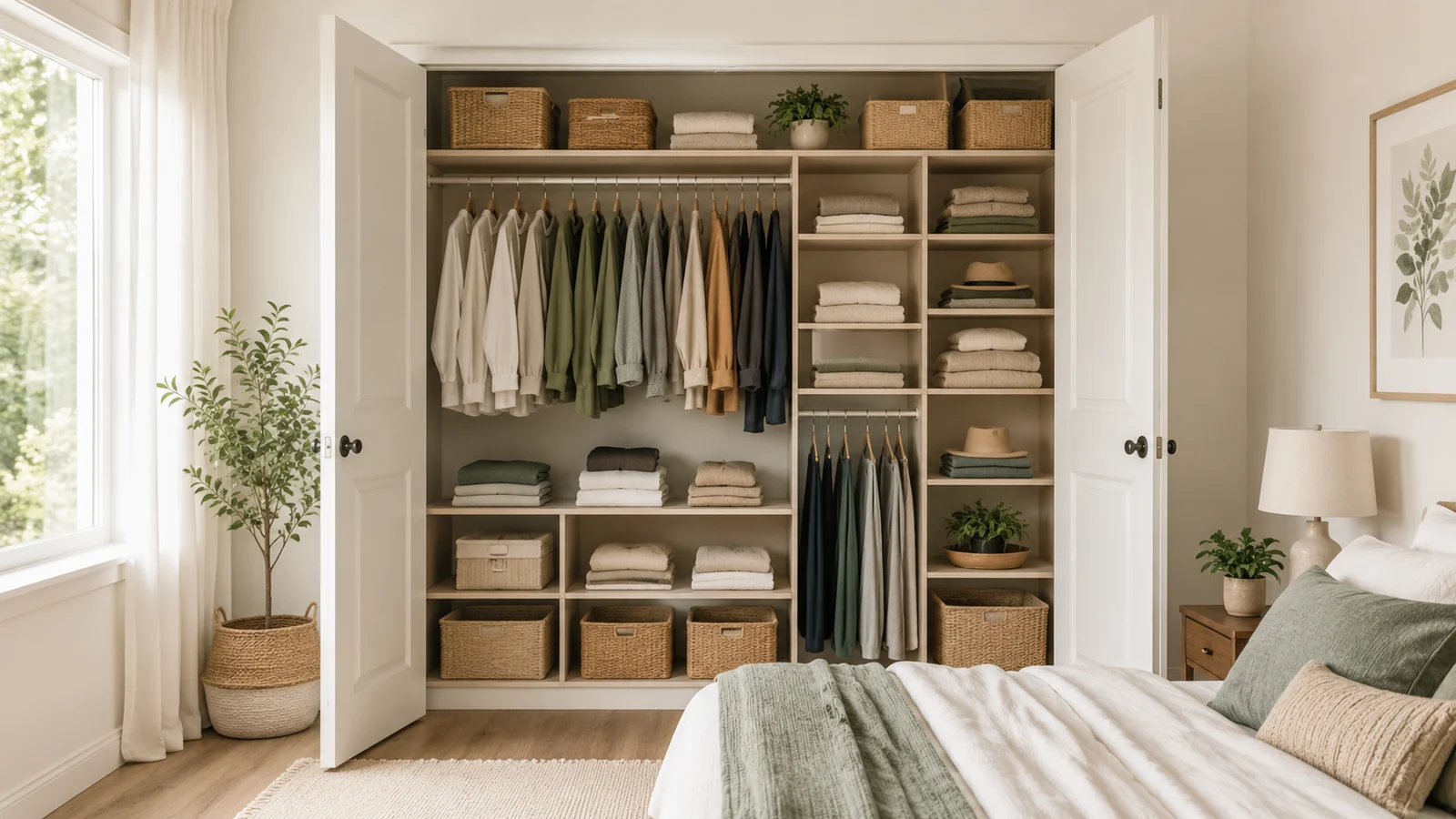
Group hanging clothes in a way that makes sense to you. You might use categories such as workwear, casual tops, jackets, and dresses. Keeping similar lengths together can also create useful space beneath shorter items.
Step 4: Use Shelves for Folded Categories
Sweaters, jeans, and bulky knitwear often work well on shelves. Avoid stacks that are so tall that removing one item collapses the entire pile.
Step 5: Add Baskets for Loose Items
Use baskets or bins for categories that otherwise spread across shelves, such as scarves, small bags, seasonal accessories, or workout gear.
Step 6: Protect Prime Real Estate
Eye-level shelves and easy-to-reach hanging space should hold items you use frequently. Move occasional or seasonal items higher or farther back.
Step 7: Give Shoes a Defined Zone
Keep everyday shoes together on a low shelf, rack, or cubby. Avoid using the entire closet floor as uncontrolled shoe storage.
Step 8: Use Matching Hangers Only If They Help
Uniform hangers can save visual space, but buying new organizers is not required. The bigger improvement comes from reducing excess and keeping categories together.
Step 9: Leave Some Empty Space
A closet packed to 100 percent capacity is difficult to maintain. A small amount of breathing room makes it easier to put clean clothes away.
A Five-Minute Weekly Closet Reset
- Return empty hangers to one spot.
- Refold one messy shelf.
- Put shoes back in their zone.
- Remove anything that belongs elsewhere.
- Move donation items out of the closet.
For linen storage, our linen closet guide uses the same principle: broad categories, accessible everyday items, and enough empty space for easy put-away.
Check the closet during a normal clothing change
Take out an outfit, then put clean pieces back. If you need to compress a pile or remove several hangers, the category may exceed its space. Review the contents before adding a hanging organizer that crowds the rail further.
Keep floor access and doors clear. Matching hangers can be useful if they solve a size or handling problem, but they are optional. Use the clothing-decluttering guide first when too many unworn pieces are preventing a practical arrangement.
Browse more practical Tidy Home Lab guides for this part of your home.
Explore Organizing →Related Guides