A One-Room-a-Day Cleaning Routine with Complete, Bounded Sessions
A one-room-a-day cleaning routine gives each session one clear location. Choose a usable endpoint for that room, handle its ordinary surfaces in a sensible order and leave essential daily food and spill tasks on their own schedule.
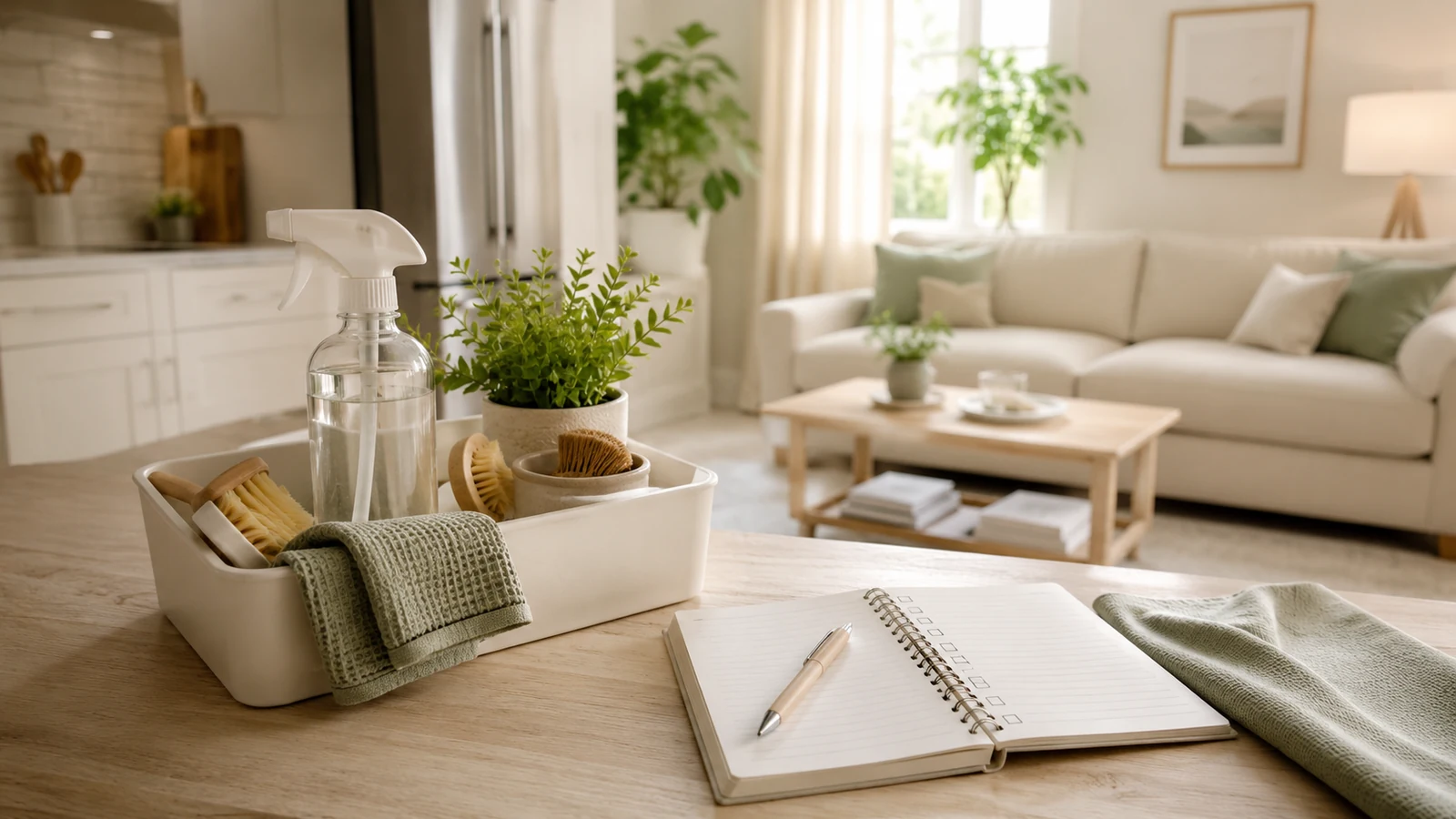
A one-room-a-day cleaning routine gives each session one clear location. Choose a usable endpoint for that room, handle its ordinary surfaces in a sensible order and leave essential daily food and spill tasks on their own schedule.
Divide rooms into sessions you can finish
| Home layout | Possible zone | Completion point |
|---|---|---|
| Studio or open-plan space | One functional area, such as seating | Surfaces usable and floor route clear |
| Several bedrooms | One bedroom or a small shared task group | Each opened room returned to use |
| Multiple bathrooms | One bathroom at a time | Products removed as directed and supplies stored |
| A large kitchen | A defined routine-cleaning session | Food-preparation area restored |
How the Routine Works
Choose one main room or zone each day. Handle the most useful cleaning tasks in that area, then stop. The goal is consistency, not completing every possible deep-cleaning job.
Example Weekly Schedule
- Monday: kitchen
- Tuesday: bathrooms
- Wednesday: bedrooms
- Thursday: living room
- Friday: entryway and hallway
- Saturday: laundry or catch-up
- Sunday: light reset only
Use the Same Basic Order
- Remove obvious clutter.
- Dust higher surfaces.
- Wipe the main usable surfaces.
- Clean the floor last.
- Return the room to a functional baseline.
Keep Daily Resets Separate
Small tasks such as putting dishes away or returning clothes to a hamper can still happen daily. The room-of-the-day schedule is for the more focused cleaning tasks.
Adjust the Rooms to Your Home
A studio apartment may need fewer zones, while a larger home may divide bedrooms or bathrooms across multiple days. Make the schedule fit your actual layout.
What If You Miss a Day?
Skip it or use your catch-up day. Do not double the workload automatically; the system should reduce pressure, not create it.
Keep a missed day from widening the next job
Write down the unfinished room and move it to the next realistic window or catch-up slot. Do not automatically combine two full rooms when you have the same limited time. Deal with an immediate spill or hygiene need when it occurs, regardless of the calendar.
At the end of a week, review which room repeatedly exceeded its session. Split that room or reduce the optional jobs. The example schedule below is a starting structure; your actual rooms and available time decide the final version.
Browse more practical Tidy Home Lab guides for this part of your home.
Explore Routines →Related Guides