Declutter Under the Kitchen Sink Before Choosing Organizers
Under-sink decluttering is a decision about what belongs in the cabinet. Review the products and tools first, then keep only suitable items that can be stored safely while leaving plumbing visible and accessible.
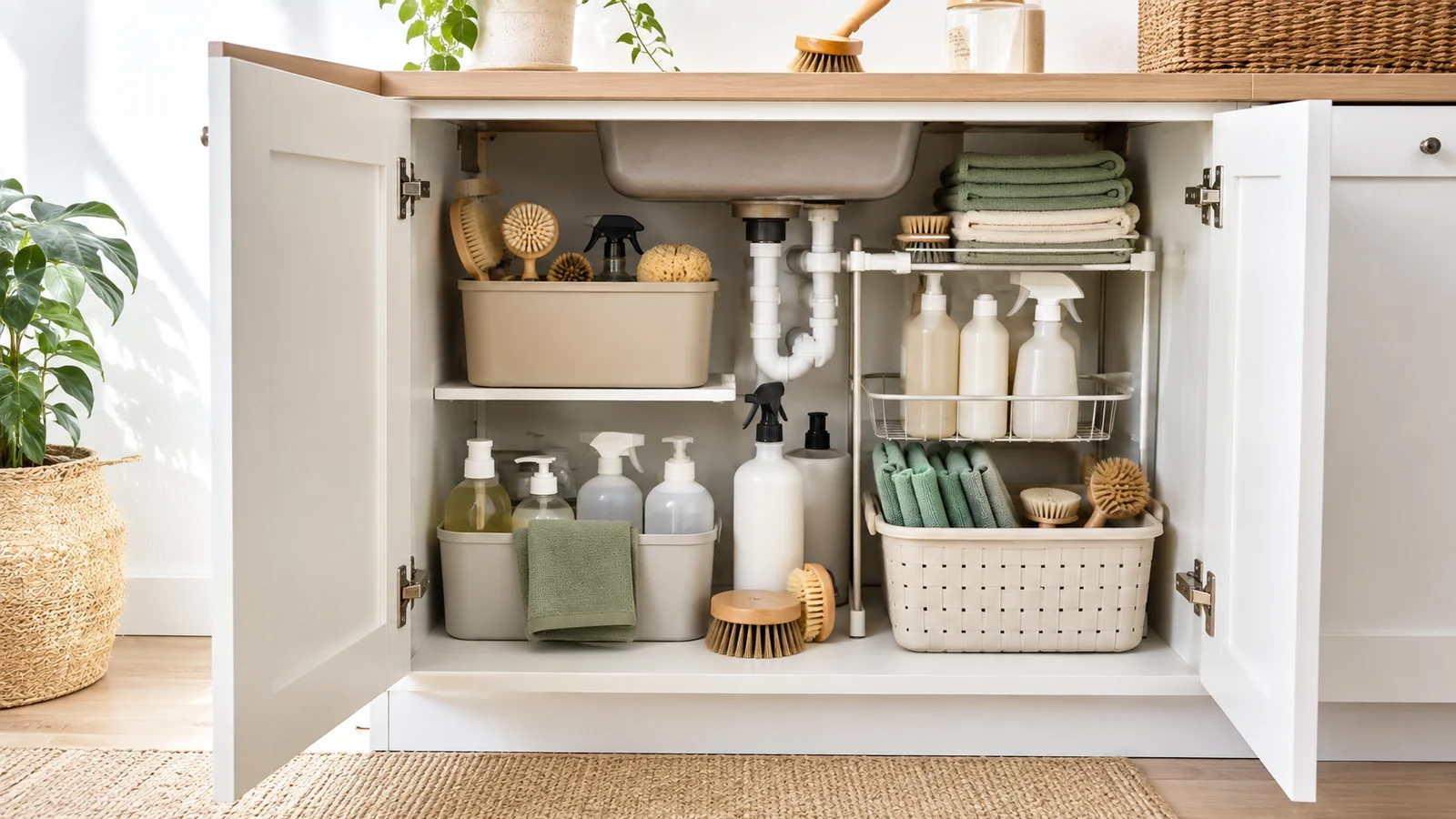
Under-sink decluttering is a decision about what belongs in the cabinet. Review the products and tools first, then keep only suitable items that can be stored safely while leaving plumbing visible and accessible.
Decide what should return to the cabinet
| Item you find | Decision to make | Next step |
|---|---|---|
| A regularly used suitable product | Keep in original packaging | Return it to a safe reachable location |
| Duplicate backups | Review realistic need and space | Keep a defined quantity in appropriate storage |
| An unknown or leaking product | Avoid combining or transferring it | Follow product and local disposal guidance |
| Unrelated household belongings | Give them the right home | Move them outside the cabinet category |
Empty the Cabinet Completely
Remove everything so you can see what is actually stored there and inspect the cabinet for leaks, dampness, or damage.
Deal with Obvious Waste
Remove empty bottles, worn-out sponges, damaged brushes, and packaging you no longer need.
Review Cleaning Products
Keep products in their original labeled containers and follow manufacturer storage and disposal directions. Never mix household cleaning chemicals, and do not transfer them into food or drink containers.
Move Unrelated Items Elsewhere
The under-sink cabinet is usually easier to maintain when it has a narrow purpose. Move unrelated tools, pantry items, paperwork, and rarely used household objects to more appropriate storage.
Create Broad Categories
- Dishwashing supplies
- Daily kitchen cleaning
- Sponges and cloths
- Trash bags
- Occasional specialty products
Protect Access to Plumbing
Do not build storage so tightly around pipes and shutoff valves that they become inaccessible. Leave a clear view of the plumbing so leaks are easier to notice.
Use a Caddy for Everyday Supplies
A portable caddy makes it easy to remove the products you use together and return them in one step.
Keep Safety in Mind
If children or pets can access the cabinet, store potentially harmful products according to their safety instructions and use appropriate child-resistant storage or another secure location when necessary.
Avoid Buying Organizers Too Early
Declutter first. Once you know exactly what will remain, choose bins or risers that fit around the plumbing and the products you actually use.
A One-Minute Weekly Check
- Return bottles to their zone.
- Remove empty containers.
- Hang or dry damp cloths appropriately.
- Look for drips or moisture.
For a storage-focused approach, compare this with our under-sink organization ideas.
Inspect the empty space before refilling it
Look for dampness, stains or swollen material and record anything new. A liner or organizer should not cover a leak that still needs attention. Keep items out of an affected area until the source has been addressed appropriately.
Check children’s or pets’ access and all product storage requirements before returning supplies. When the keep decisions are complete, use the under-sink organization guide for layout and measurements. Buying bins first can preserve exactly the excess products you wanted to remove.
Browse more practical Tidy Home Lab guides for this part of your home.
Explore Decluttering →Related Guides