Reduce Dust at Home: Find the Sources and Clean in a Useful Order
Dust control works better when you notice where dust returns first. Track the entry, soft furnishings, shelves and frequently used rooms, then combine an appropriate cleaning route with small changes at those sources.
Dust control works better when you notice where dust returns first. Track the entry, soft furnishings, shelves and frequently used rooms, then combine an appropriate cleaning route with small changes at those sources.
Use the location as a clue
| Where dust builds up | Check | Practical change to try |
|---|---|---|
| Beside the entrance | Shoes, mats and outdoor debris | Keep the arrival area easier to clean |
| Around crowded displays | Hard-to-reach surfaces | Reduce the number of objects moved during dusting |
| Under frequently used furniture | Access and missed floor areas | Add accessible edges to the cleaning route |
| On fan blades or blinds | High surfaces outside the normal routine | Include them before cleaning the floor |
Start with the Highest Dust-Collecting Areas
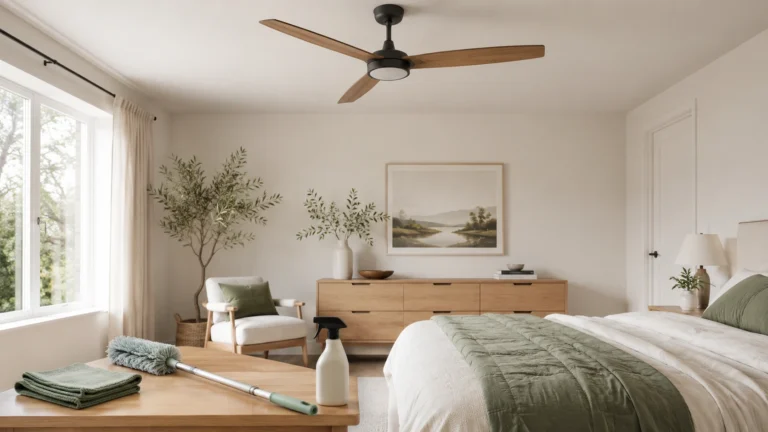
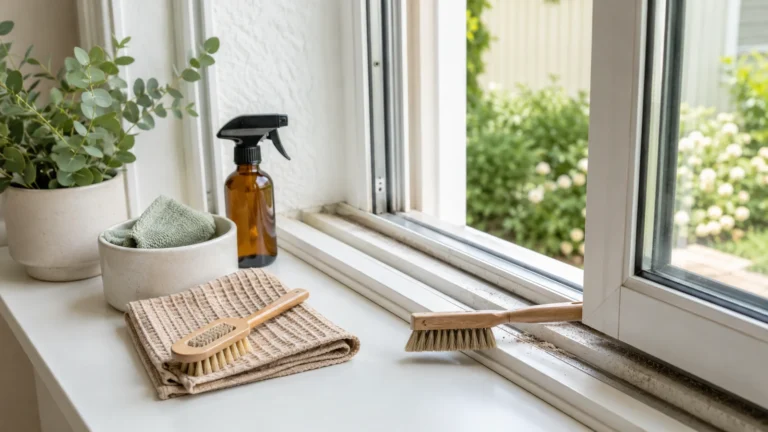
Dust settles downward, so begin above eye level before cleaning lower surfaces and floors. Check ceiling fan blades, the tops of cabinets, shelves, frames, lamps, and window ledges.
A slightly damp microfiber cloth often captures dust more effectively than a dry feather duster that can send particles back into the air.
Work from Top to Bottom
Use the same order in each room: high surfaces, furniture and shelves, then floors. This prevents you from vacuuming first and then dropping dust onto a freshly cleaned floor.
Vacuum High-Traffic Areas Regularly
Floors collect dust, hair, fibers, outdoor debris, and particles from everyday activity. Vacuum or sweep as often as your household needs, paying extra attention to entryways, bedrooms, living rooms, and areas around upholstered furniture.
If your vacuum has filters, maintain them according to the manufacturer’s instructions so the machine continues to work effectively.
Wash Bedding and Soft Furnishings on a Routine
Bedding, throws, cushion covers, and washable curtains can hold dust and fibers. Wash items according to their care labels and household needs. You do not need to wash every textile constantly; focus on the items used most often.
Reduce Unnecessary Surface Clutter
Every decorative object creates another edge and surface where dust can settle. You do not need a minimalist home, but fewer small items on open surfaces make dusting faster.
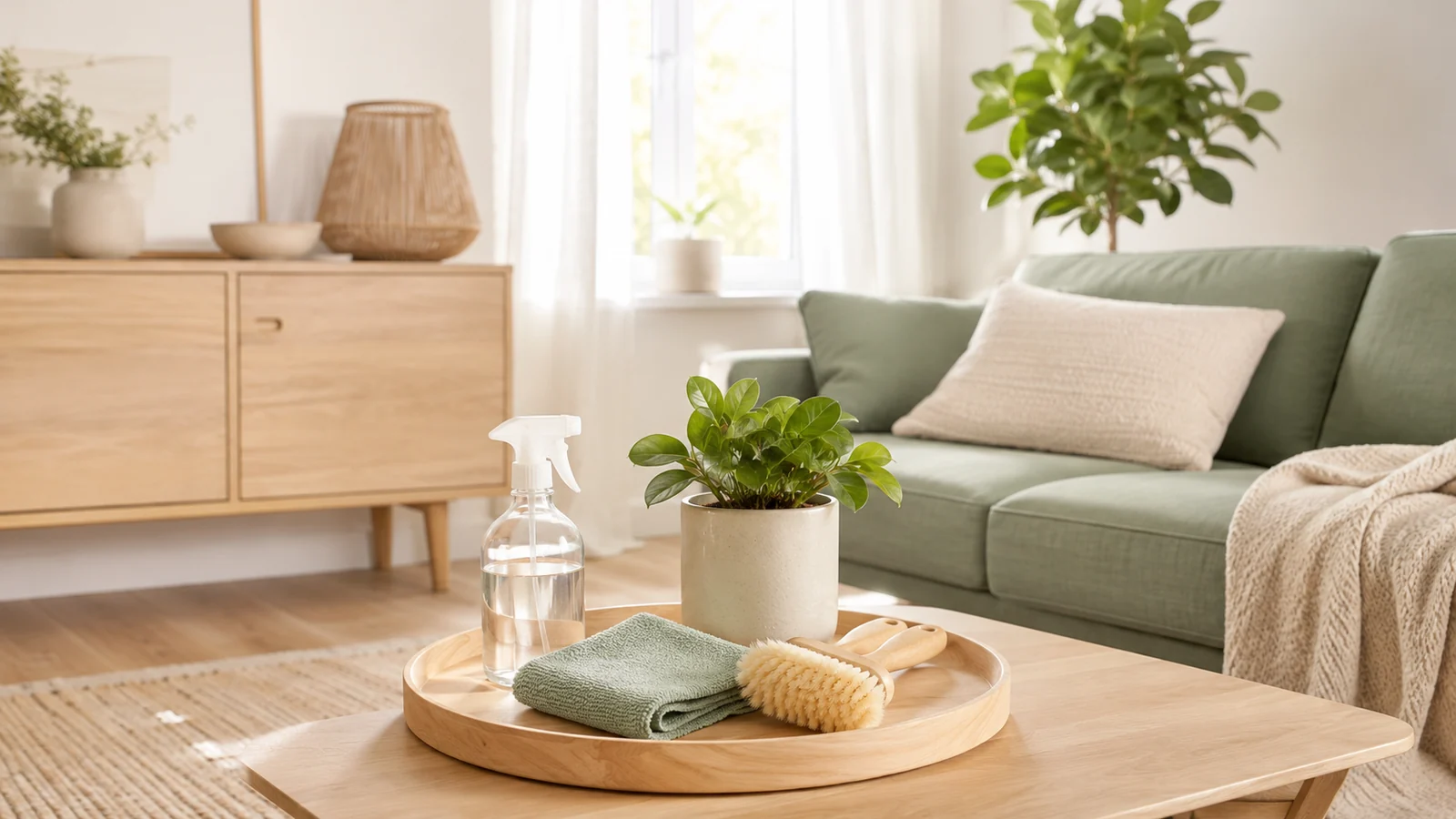
Group frequently used objects on a tray or keep less-used items inside cabinets when practical.
Keep Entryways Under Control
A portion of household dust comes in from outdoors on shoes, clothing, bags, and pets. A doormat, regular entryway cleaning, and a practical shoe-storage habit can reduce what travels deeper into the home.
Clean Under Furniture When Needed
Dust tends to collect beneath beds, sofas, cabinets, and other furniture. Add these hidden areas to a rotating cleaning routine rather than trying to move every piece of furniture each week.
Do Not Forget Electronics
Televisions, computer equipment, chargers, and other electronics attract visible dust. Turn equipment off when appropriate and follow manufacturer guidance before cleaning screens, vents, or electrical devices.
Check Air Filters and Ventilation Systems
If your home uses forced-air heating or cooling, check filters according to the system manufacturer’s recommended schedule. The correct filter type and replacement interval depend on the equipment.
Also keep accessible vents free from obvious dust and avoid blocking them with furniture.
A Simple Weekly Dust-Control Routine
- Wipe main horizontal surfaces.
- Vacuum or sweep high-traffic floors.
- Shake out or clean entry mats as appropriate.
- Reset clutter on tables and shelves.
- Check one rotating hidden area, such as under a sofa or bed.
Common Mistakes That Make Dusting Harder
- Using a dry tool that spreads dust instead of capturing it.
- Dusting after vacuuming.
- Ignoring fabrics and upholstered surfaces.
- Keeping too many small objects on open shelves.
- Forgetting equipment filters and vents.
Frequently Asked Questions
Why does my house get dusty so quickly?
Dust can come from textile fibers, skin cells, outdoor particles, pets, and normal household activity. The rate varies by home, climate, ventilation, and lifestyle.
Should I dust or vacuum first?
In most routine cleaning, dust higher surfaces first and vacuum afterward so fallen particles are removed from the floor.
Compare one cleaning cycle with the next
Write down the surface, the date and the change you tried. You are observing your home’s pattern, not measuring a health outcome. If dust returns rapidly in one location, inspect the nearby source instead of automatically increasing every room’s cleaning frequency.
Follow equipment guidance for filters and accessible vent covers. Visible grille dust alone does not establish that the ducts need cleaning. Use the detailed room tasks below to complete the route from higher surfaces to the floor.
Browse more practical Tidy Home Lab guides for this part of your home.
Explore Cleaning →Related Guides