Under-Sink Organization: Keep Daily Supplies and Plumbing Accessible
Under-sink storage has an irregular shape and a second job: keeping plumbing accessible. Start by checking usable space around pipes, then arrange daily supplies so they come out easily without hiding a recurring drip or service point.
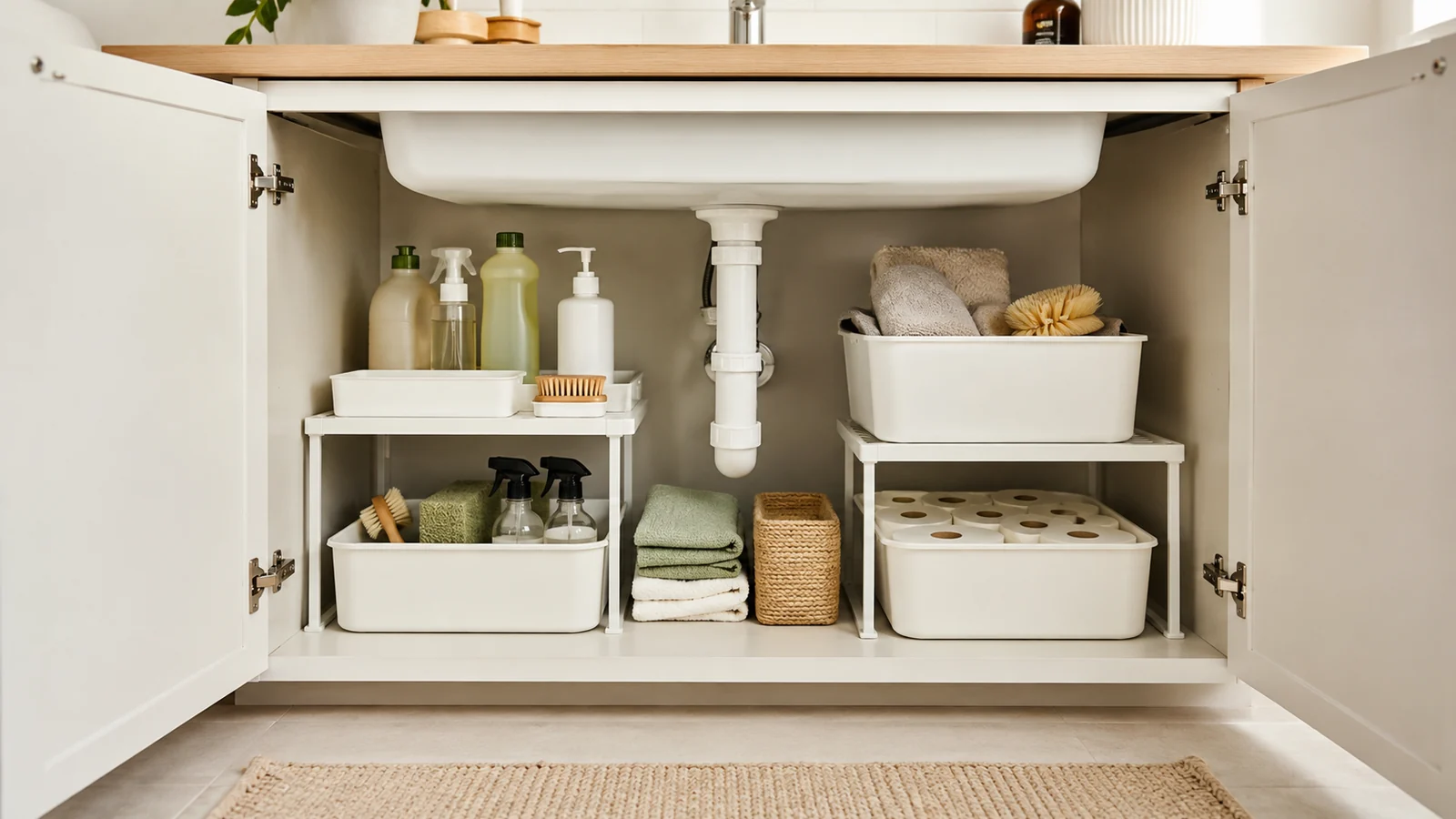
Under-sink storage has an irregular shape and a second job: keeping plumbing accessible. Start by checking usable space around pipes, then arrange daily supplies so they come out easily without hiding a recurring drip or service point.
Give each cabinet area a clear role
| Area | Suitable use | Access condition |
|---|---|---|
| Front edge | A small daily-use caddy | It lifts out without unloading other containers |
| Space beside pipes | Compatible products in original containers | Nothing presses on connections or blocks inspection |
| Rear or awkward corner | Identified, appropriate backups | They remain visible or clearly labeled |
| Damp or stained area | Inspection and repair access | Keep belongings clear until the source is addressed |
Empty the Cabinet First
Take everything out and wipe the cabinet before reorganizing. Discard empty containers and remove products that belong somewhere else. Check product labels and local disposal guidance before getting rid of household chemicals.
Separate Kitchen and Bathroom Needs
Kitchen under-sink storage often works best for dishwashing and kitchen-cleaning supplies. Bathroom cabinets may hold cleaning products, spare toiletries, cloths, or paper goods. Keeping the category narrow prevents the space from becoming a general catch-all.
Use Portable Bins or Caddies
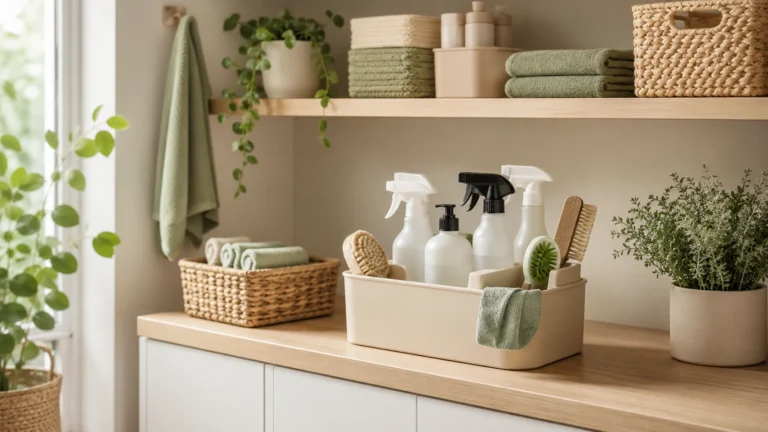
Group products that are used together inside a bin or caddy. A portable caddy can be lifted out when cleaning and returned in one step.
- Daily cleaning supplies
- Dishwashing supplies
- Extra sponges and cloths
- Small bathroom refills
Work Around the Plumbing
Do not force rigid organizers into a space that needs access to pipes and shutoff valves. Choose narrow bins, small risers, or modular containers that leave important plumbing visible and reachable.
Add Vertical Storage Carefully
A small shelf riser can create a second level for lightweight supplies. The inside of the cabinet door may also hold a small rack if it does not interfere with hinges, plumbing, or closing the door.
Keep Frequently Used Items in Front
Products used every day should not be buried behind backups. Put frequently used supplies at the front and occasional refills behind or above them.
Contain Small Items
Dishwasher tablets, sponges, scrubbers, gloves, and small refills are easier to manage when they have a defined container. Open bins are often faster to maintain than complicated lidded boxes.
Protect the Cabinet Base
A washable liner or tray can make minor drips easier to notice and clean. It should never be used to hide an active plumbing leak. Investigate unexpected moisture promptly.
Think About Household Safety
If children or pets can access the cabinet, store cleaning products and other potentially harmful items according to product safety instructions and use appropriate child-resistant storage where needed.
A Five-Minute Under-Sink Reset
- Remove empty containers.
- Return products to their bin.
- Fold or replace loose cloths.
- Check for leaks or moisture.
- Wipe obvious spills.
What to Avoid
- Buying organizers before measuring around the pipes.
- Keeping years of duplicate products.
- Blocking shutoff valves.
- Mixing unrelated categories until nothing is easy to find.
Try the arrangement with the door closed
Check that bottles stand securely, the cabinet closes and you can still see the plumbing. Measure around the pipes before buying a pull-out organizer. Keep product storage requirements and access by children or pets in mind; an attractive bin does not make hazardous products safe.
If the cabinet contains items you no longer need, use the separate decluttering guide first. This organization plan assumes you are arranging the supplies you have decided to keep.
Browse more practical Tidy Home Lab guides for this part of your home.
Explore Organizing →Related Guides