Organize a Small Bathroom Closet with Reachable Daily Groups
A small bathroom closet needs a clear distinction between daily supplies and stored backups. Start with shelf dimensions and door clearance, then assign the easiest space to the items your household regularly retrieves.
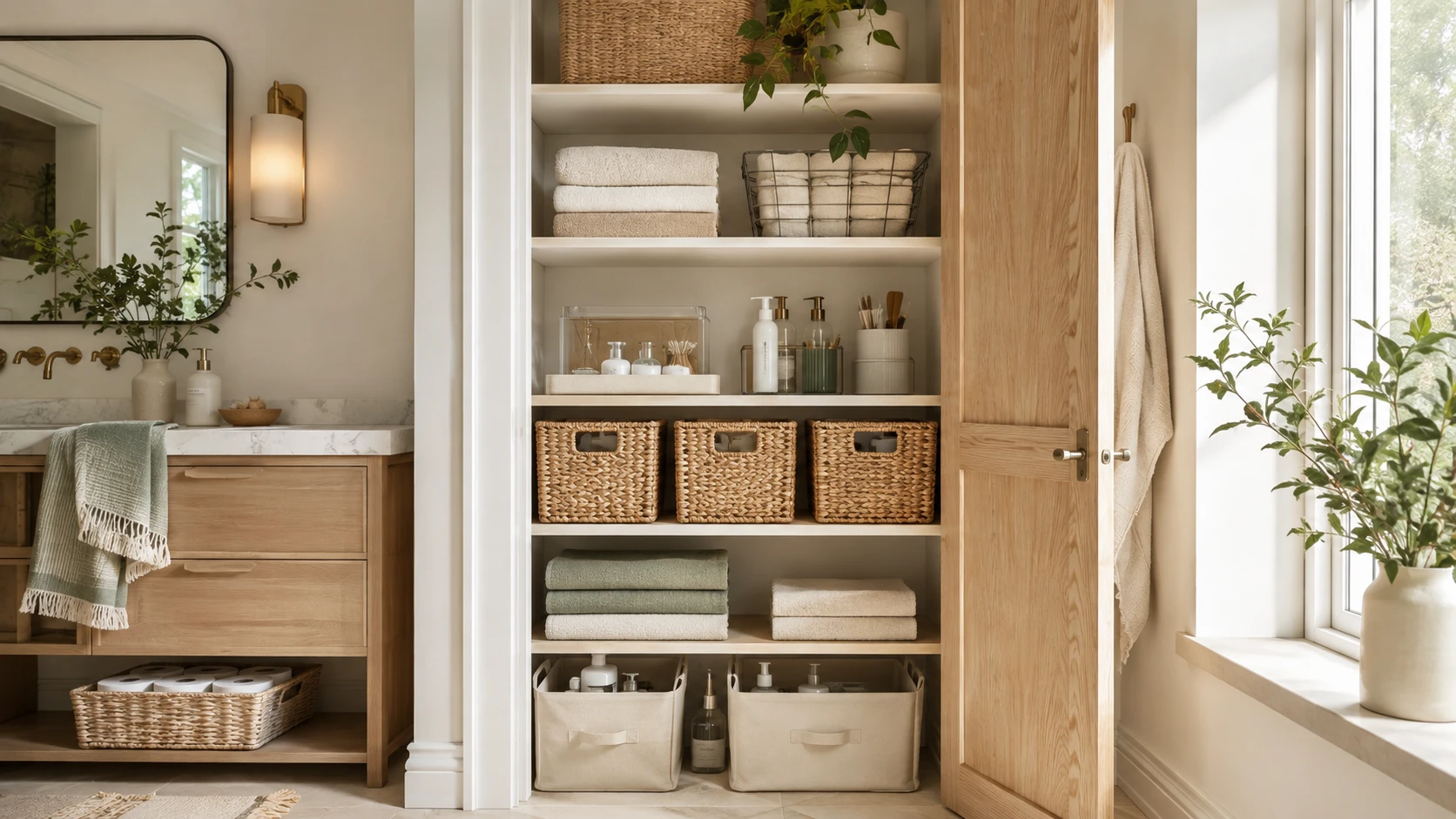
A small bathroom closet needs a clear distinction between daily supplies and stored backups. Start with shelf dimensions and door clearance, then assign the easiest space to the items your household regularly retrieves.
Test three ordinary retrievals
- Take out a towel without pulling down the whole pile.
- Find one daily supply without opening several unmarked containers.
- Put a replacement item away without compressing the shelf or hiding an older backup.
If one of these fails, change that shelf’s arrangement before buying more bins. Deep shelves can benefit from clearly separated front and rear categories, but frequently used items should remain reachable.
Step 1: Empty One Shelf at a Time
Work shelf by shelf so the bathroom does not become covered in supplies. Remove obvious trash, empty packages, and products you no longer use.
Step 2: Create Broad Categories
- Bath towels and hand towels
- Daily toiletries
- Backups and refills
- Paper goods
- Cleaning supplies stored safely
- Guest items
Broad categories are easier to maintain than highly specific ones.
Step 3: Put Everyday Items at Eye Level
Keep frequently used towels and toiletries between waist and eye level. Store less-used guest supplies or backups higher or lower.
Step 4: Use Baskets for Small Items
Open baskets are useful for bottles, washcloths, hair products, and refills. Choose containers that can be lifted out easily so the shelf remains easy to clean.
Step 5: Fold Towels to Fit the Shelf
Use a consistent folding method that matches the depth of the closet. The best fold is the one that lets you remove one towel without disturbing the entire stack.
Step 6: Limit Backstock
Too many backups can consume a small closet quickly. Keep a reasonable amount of extra product and use older items before opening new ones.
Step 7: Use the Door Carefully
If the closet door has enough clearance, a shallow organizer may hold small items. Make sure it does not prevent the door from closing or create excessive weight on the hinges.
Step 8: Keep Moisture in Mind
Store clean linens only when they are fully dry. If the closet has persistent dampness or poor ventilation, address the moisture source rather than simply adding more storage containers.
A Five-Minute Bathroom Closet Reset
- Return loose items to their baskets.
- Refold one messy towel stack.
- Remove empty packages.
- Move duplicates together.
- Wipe one shelf if needed.
If you need help with the rest of the room, pair this system with our small bathroom organization ideas.
Keep the stored group suitable for the room
Check label requirements for products affected by temperature or humidity. Store clean textiles only when fully dry and keep potentially hazardous products appropriately secured. An unused high shelf should hold only items that can be reached and handled safely.
Keep a small inventory of backup categories if duplicate shopping is the main problem. When the shelf becomes hard to use again, review its quantity rather than spreading the same excess into another basket. The linen-closet guide covers bedding and towel arrangements in more detail.
Browse more practical Tidy Home Lab guides for this part of your home.
Explore Organizing →Related Guides