Organize Kitchen Drawers by Tool Size and the Task Beside Them
Kitchen drawers work better when their contents match the nearby task and fit the drawer's movement. Empty one drawer, review its useful tools and measure the space before choosing dividers.
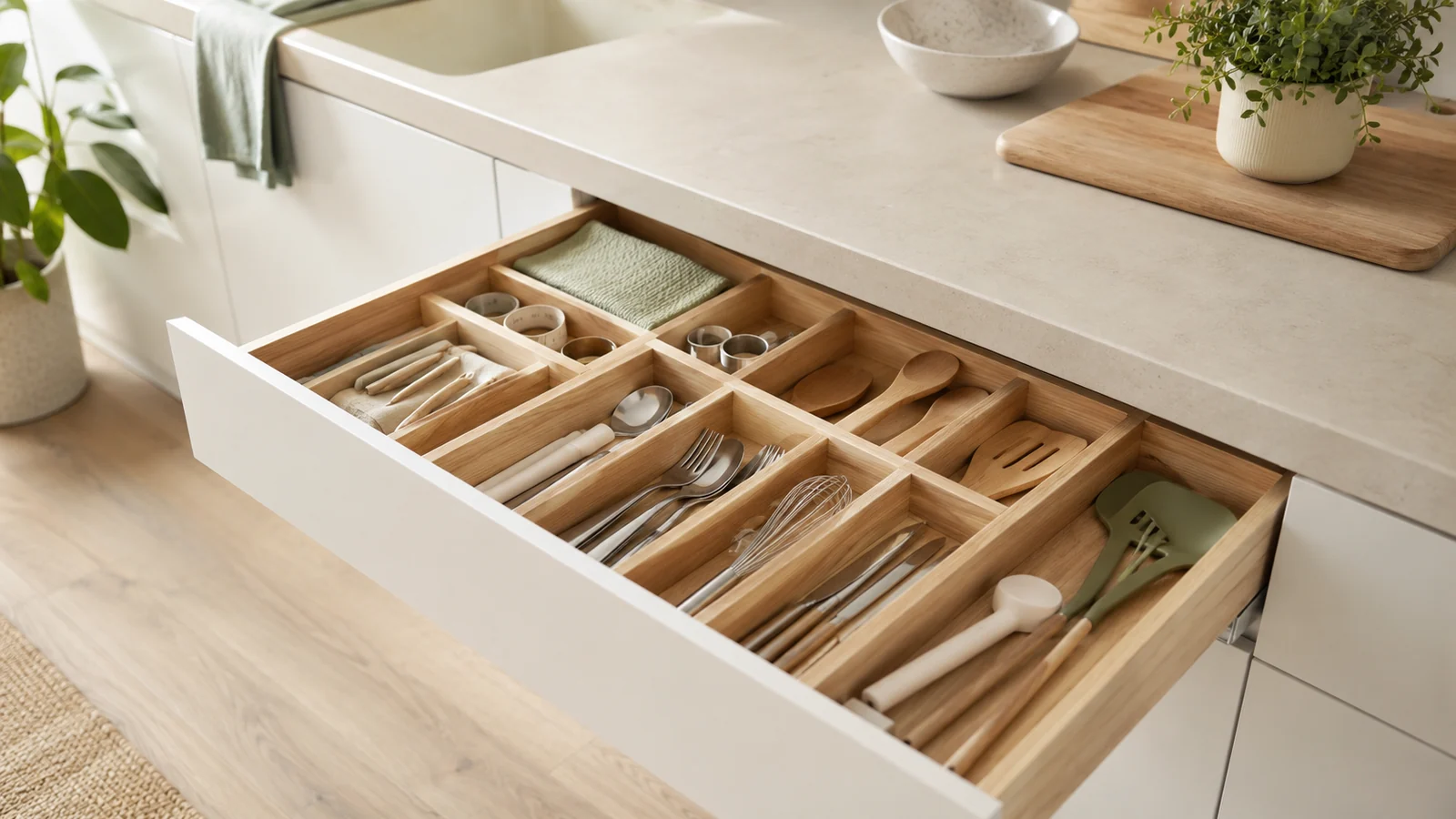
Kitchen drawers work better when their contents match the nearby task and fit the drawer’s movement. Empty one drawer, review its useful tools and measure the space before choosing dividers.
Give the drawer a single practical job
| Drawer location or shape | Category to consider | Fit check |
|---|---|---|
| Beside preparation space | Frequently used preparation tools | Tools are visible and can be lifted safely |
| Near the dining area | Everyday cutlery | Pieces fit without crossing compartments |
| A deeper drawer | Suitable larger utensils or accessories | Nothing catches above the drawer sides |
| A small awkward section | A tightly defined small category | The container does not slide into the track |
Start with One Drawer
Do not empty the entire kitchen at once. Choose the most-used drawer and finish it before moving to the next.
Remove Duplicates and Unused Tools
Take out broken utensils, duplicate gadgets you never reach for, and items that belong elsewhere. If a tool is useful only once or twice a year, it may not deserve prime drawer space.
Group Items by Function
- Everyday cutlery
- Cooking utensils
- Baking tools
- Measuring tools
- Food-storage accessories
- Small prep tools
Measure Before Buying Dividers
Drawer organizers are useful only when they fit. Measure the internal width, depth, and height before purchasing trays or adjustable dividers.
Keep Everyday Items Closest to the Work Zone
Store cooking tools near the stove and prep tools near the main counter when possible. Organization works better when it supports the way you use the room.
Avoid Overfilling Compartments
A divider does not create more physical space. If a compartment is packed tightly, remove less-used items instead of forcing more into it.
Use Shallow Containers for Tiny Items
Small clips, bottle tools, measuring spoons, and similar pieces can disappear inside large drawers. A shallow tray keeps these items together without requiring a complex system.
Keep Long Utensils in a Suitable Zone
Spatulas, tongs, whisks, and wooden spoons need longer compartments. If they do not fit comfortably, a countertop crock or deeper drawer may be more practical.
What Not to Keep in a Kitchen Drawer
Move manuals, old takeaway menus, unrelated batteries, expired coupons, and miscellaneous household items out of food-preparation drawers unless you intentionally maintain a separate household drawer.
A Quick Monthly Drawer Reset
- Remove crumbs.
- Return misplaced items.
- Discard broken pieces.
- Review duplicates.
- Wipe the drawer and organizer.
If your whole kitchen needs attention, combine this with our small-kitchen organization guide.
Test the opening and return movement
Close the filled drawer gently, reopen it and put a used item back. Long handles, stacked tools or loose dividers can make a layout fail even when the drawer looks neat from above. Keep sharp objects in storage designed for safe handling.
Remove tools you do not use before deciding that another organizer is necessary. Keep unrelated paperwork, batteries and miscellaneous belongings elsewhere. The general junk-drawer guide can help establish a separate home for legitimate household essentials.
Browse more practical Tidy Home Lab guides for this part of your home.
Explore Organizing →Related Guides