Declutter Your Kitchen by Reviewing Tools, Containers and Counter Space
Kitchen decluttering starts with the items you reach past every day. Choose a tool category, a container shelf or a counter section, then decide which pieces support the meals you actually prepare.
Kitchen decluttering starts with the items you reach past every day. Choose a tool category, a container shelf or a counter section, then decide which pieces support the meals you actually prepare.
Ask a question suited to each category
| Category | Decision question | Next action |
|---|---|---|
| Cooking tools | Which version do I regularly choose? | Keep useful alternatives; review idle duplicates |
| Food containers | Does it have a matching lid and a real use? | Pair pieces before arranging the shelf |
| Small appliances | Does its use justify the space it occupies? | Give occasional equipment appropriate storage |
| Countertop belongings | Does it need to live at the working surface? | Move suitable items to reachable storage |
Start with One Zone
Do not empty every cabinet at once. Choose one small zone such as food containers, mugs, cooking utensils, one pantry shelf, or the countertop. Finish that area before moving on.
Clear the Counter First
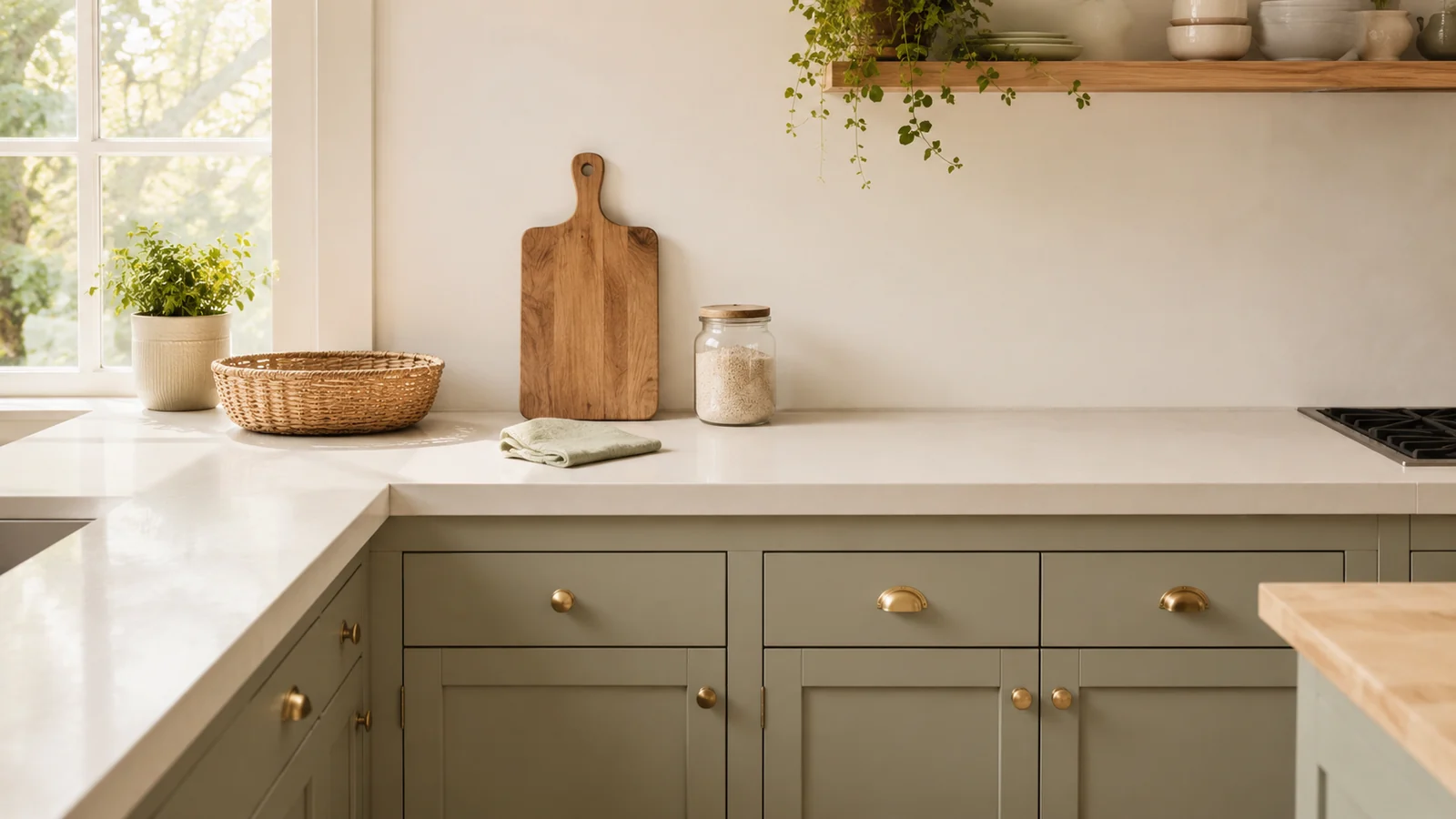
Countertops are valuable work surfaces. Remove papers, packaging, rarely used appliances, and objects that belong elsewhere. Keep only the items that support daily kitchen tasks or are intentionally displayed.
Review Duplicates
Kitchens often accumulate duplicate peelers, spatulas, mixing bowls, mugs, bottles, and gadgets. Keep the number that matches how you actually cook and entertain.
Useful extras in good condition can be donated, offered to friends or family, or moved to another appropriate use rather than thrown away.
Sort Food Storage Containers
Match containers with lids. Remove badly damaged pieces and consider whether you need every size and shape. A smaller, coordinated collection is usually easier to store.
Declutter the Pantry Without Wasting Food
Check dates, package condition, and what your household realistically eats. Move soon-to-be-used items to the front. Consider meal planning around usable foods that have been forgotten.
For unopened food you will not use, local food banks or community organizations may accept suitable items; check their current donation rules first.
Review Small Appliances
Ask how often each appliance is used and whether another tool already does the same job. If an appliance is valuable but rarely used, store it away from prime countertop space.
Keep Your Best Everyday Tools
The goal is not to own as little as possible. Keep reliable knives, pans, utensils, dishes, and tools that support the way you cook. Decluttering should make the kitchen more functional, not less capable.
Create a Maybe Box for Hard Decisions
If you are uncertain about a nonessential item, place it in a temporary box outside the kitchen. Add a review date. If you do not reach for it during that period, the decision may become easier.
Use Categories to Prevent Re-Cluttering
Give each category a realistic boundary: one drawer for utensils, one shelf for mugs, one cabinet for food containers. When a category no longer fits comfortably, review it before buying more storage.
Questions to Ask
- Have I used this in the last year?
- Do I own another item that does the same thing?
- Would I buy this again today?
- Is it easy to use and clean?
- Is keeping it worth the storage space?
Keep the project out of tonight’s cooking route
Avoid emptying every cabinet at once if the kitchen must be used soon. Close one category, remove its rejects and restore the cooking surface before opening another. Set aside shared items for the owner’s decision rather than guessing.
Food decisions require a separate safety check; appearance and a desire to avoid waste are not enough to judge an uncertain item. Once the excess belongings have left, use the small-kitchen organization guide to arrange the tools you kept.
Browse more practical Tidy Home Lab guides for this part of your home.
Explore Decluttering →Related Guides