Air-Dry Clothes Indoors with Spacing, Airflow and a Moisture Check
Indoor drying works best when wet fabric has space to release moisture and the room can handle that moisture. Plan the drying location before washing, then separate slow-drying pieces so they do not keep the whole load crowded together.
Indoor drying works best when wet fabric has space to release moisture and the room can handle that moisture. Plan the drying location before washing, then separate slow-drying pieces so they do not keep the whole load crowded together.
Read the drying rack while the load is drying
| What you notice | Adjustment to consider | Check afterward |
|---|---|---|
| Garments touch along their length | Leave more space or reduce the load on the rack | Hidden folds are drying too |
| Thick seams remain damp | Open or reposition the allowed garment | The care label permits the handling method |
| Windows collect moisture nearby | Review room humidity and suitable ventilation | Condensation and damp surfaces are addressed |
| A musty smell appears | Check fabric and room conditions | Do not fold or store a still-damp item |
Start with a Well-Spun Load
Use an appropriate washer spin setting for the fabric so clothes are not carrying unnecessary water when they leave the machine. Follow garment care labels.
Shake Out Each Item
Give garments a quick shake before hanging them. This separates folds and helps more fabric surface contact the air.
Leave Space Between Clothes
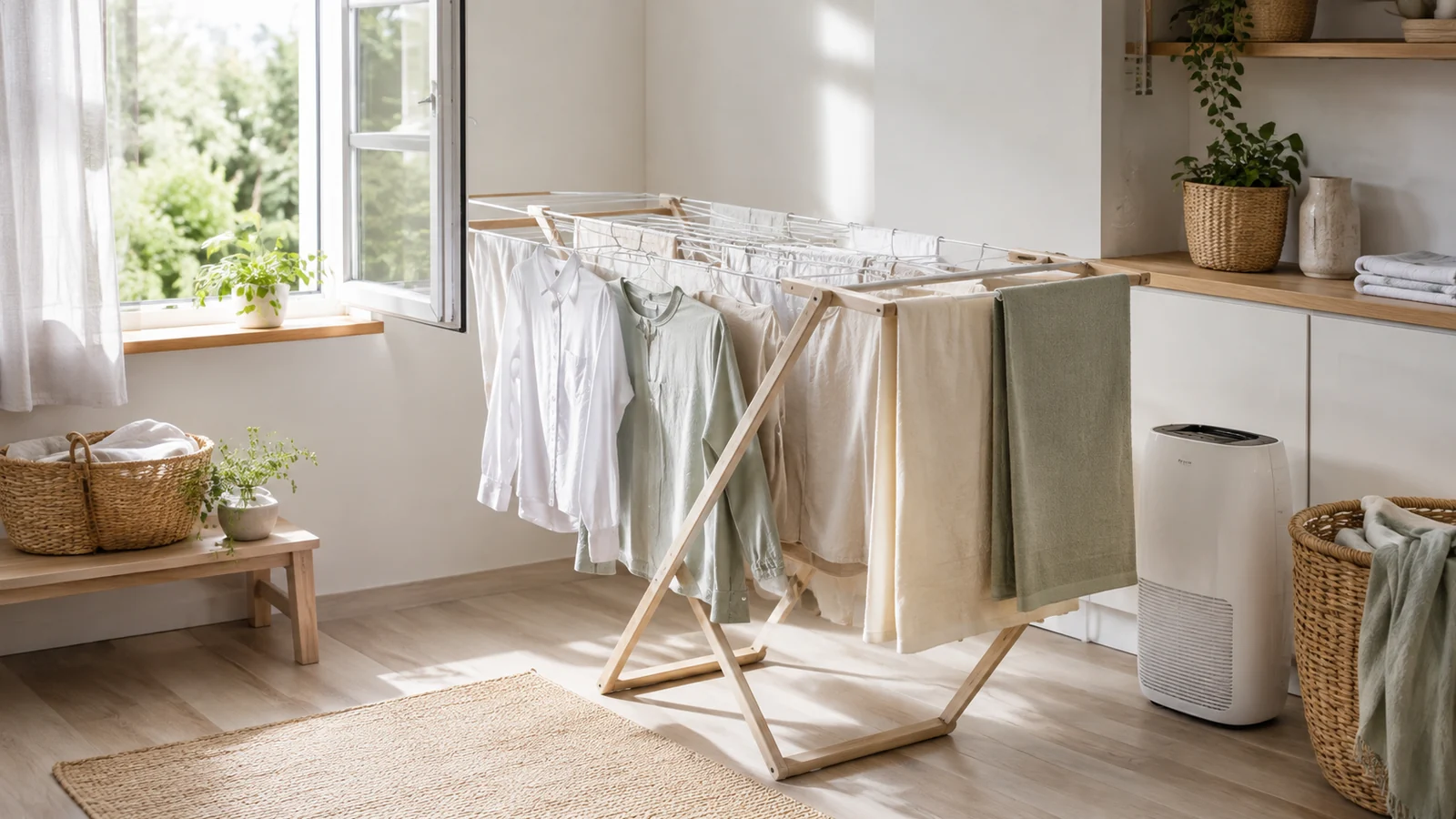
Do not pack a drying rack tightly. Air needs to move around each item. Alternate long and short pieces or leave empty rails between thick garments when possible.
Choose a Room with Good Airflow
Use an area where air can circulate. An open window may help when outdoor conditions are appropriate. Existing mechanical ventilation can also be useful when operated according to the home’s design.
Manage Indoor Humidity
If the room becomes noticeably humid or condensation forms on windows, the space needs better moisture control. A properly sized dehumidifier can help in suitable situations; follow the equipment manufacturer’s instructions.
Turn Thick Items
Heavy towels, waistbands, pockets, and layered seams often stay damp longer. Reposition thick items partway through drying so trapped areas receive more airflow.
Do Not Fold Clothes Until Fully Dry
Even slightly damp garments can develop stale odors inside drawers or closets. Check thick seams before folding.
Separate Slow-Drying Items
Do not let a heavy towel sit against a lightweight shirt. Group similar drying times or give bulky pieces extra space.
Keep the Drying Area Clean
Dust the rack occasionally and avoid placing clean wet laundry where it can touch dirty floors or clutter.
What If Clothes Still Smell Musty?
If freshly washed clothes repeatedly smell stale, check whether they are sitting wet in the washer, drying too slowly, being stored damp, or whether the washer itself needs manufacturer-recommended cleaning.
For more laundry freshness tips, see how to keep clothes smelling fresh after washing.
Give the slowest items their own space
Heavy waistbands, pockets and folded layers may finish later than light pieces. Remove fully dry items to create room and inspect the remaining parts before deciding the load is complete.
Avoid draping clothing over heaters or equipment unless its instructions expressly permit the arrangement. Keep the rack stable and outside walking routes. If the room remains damp despite suitable airflow, review the moisture source and appropriate equipment guidance rather than adding more wet loads.
Sources and further guidance
Browse more practical Tidy Home Lab guides for this part of your home.
Explore Laundry →Related Guides