Keep a Laundry Room Efficient by Clearing Each Stage’s Working Space
A laundry room needs space for sorting, transferring, drying and putting away clothes. Check which stage is currently blocked, then clear that working space before arranging decorative or backup storage.
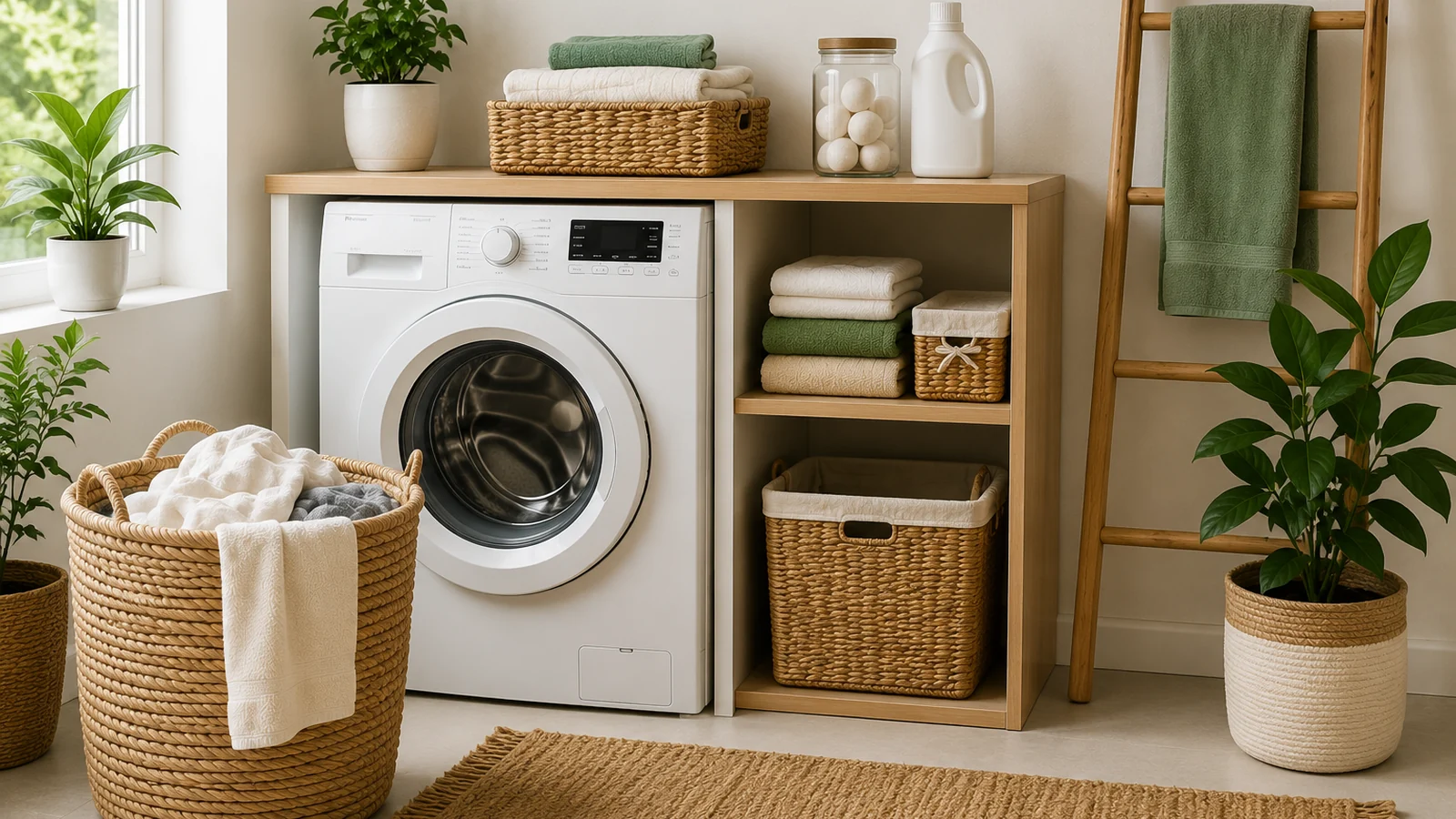
A laundry room needs space for sorting, transferring, drying and putting away clothes. Check which stage is currently blocked, then clear that working space before arranging decorative or backup storage.
Assign a place to each stage
| Stage | Space to protect | Warning sign |
|---|---|---|
| Sorting | A suitable place for compatible groups | Clean and dirty items become mixed |
| Transfer | Access to the machines and drying area | Finished loads block the next one |
| Folding or hanging | One usable work area | Supplies and unrelated storage occupy it |
| Put-away | Identified baskets or a direct route | Clean clothes remain piled indefinitely |
Keep the Floor Clear
Avoid using the walking area as long-term storage. Give hampers, baskets, detergents, and cleaning tools permanent locations so the room remains easy to move through.
Limit Supplies to What You Actually Use
Keep everyday detergent, stain treatment, and other routine products accessible. Move bulk backups to a secondary storage area if they crowd the working space.
Wipe the Main Work Surface
Detergent drips and lint collect on counters and appliance tops. A quick wipe after laundry day prevents sticky buildup.
Maintain the Washer
Follow the washer manufacturer’s instructions for cleaning cycles, dispensers, filters, seals, and door position between loads. Different machines have different maintenance requirements.
Pay Attention to Dryer Lint
Clean the lint filter according to the dryer manufacturer’s instructions, typically as part of regular use. Keep the area around the dryer free of lint and combustible clutter.
Dryer ducts and vents should be installed and maintained correctly. If airflow seems reduced, drying times increase, or you are unsure about vent condition, use appropriate professional service rather than dismantling unsafe components.
Give Damp Items a Place to Dry
Do not leave wet towels or cleaning cloths piled in a basket. Hang them appropriately until dry or wash them promptly.
Keep a Folding Zone Available
If your laundry room has a counter, protect part of it for folding. A surface that is always covered with supplies cannot serve its main purpose.
Use Baskets by Function
A few broad categories are usually enough:
- Dirty laundry
- Clean items waiting to be put away
- Cleaning cloths
- Laundry supplies
Check for Moisture
Watch for leaks, damp floors, condensation, or persistent musty odors. Address moisture promptly and seek appropriate service for appliance or plumbing leaks.
A Five-Minute Weekly Laundry Room Reset
- Return products to their shelf.
- Remove empty containers.
- Wipe the main surface.
- Clear lint and visible debris.
- Return clean laundry to the rest of the home.
Combine this with our weekly laundry routine so room maintenance happens naturally while loads are running.
Add equipment care to the real workflow
Follow the washer and dryer manuals for filters, lint screens and cleaning. A visible lint check does not replace required dryer vent maintenance, and machine openings should not be used as general storage surfaces where the manufacturer requires clearance.
Store laundry products in original containers according to their instructions and keep them secure from children and pets. Give damp items an appropriate drying location. If you find unusual moisture or appliance behavior, record it and arrange the right investigation rather than simply reorganizing around it.
Browse more practical Tidy Home Lab guides for this part of your home.
Explore Laundry →Related Guides