Declutter a Bedroom by Restoring the Bed, Floor and Daily Storage
Bedroom decluttering starts with the functions you need every day: a usable bed, a clear route through the room and storage that accepts the clothes you wear. Choose one small area and keep the rest of the room available while you work.
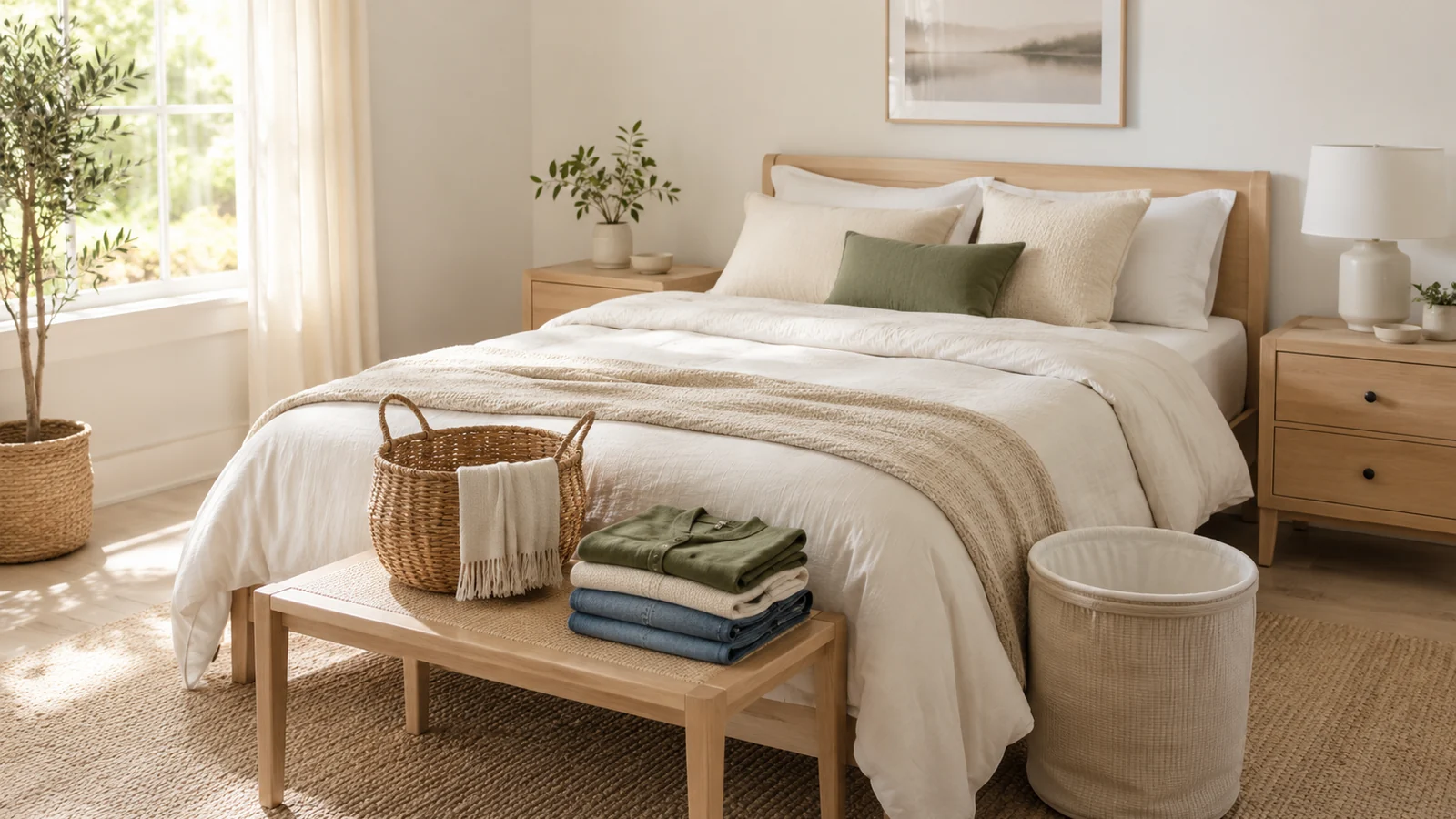
Bedroom decluttering starts with the functions you need every day: a usable bed, a clear route through the room and storage that accepts the clothes you wear. Choose one small area and keep the rest of the room available while you work.
Start with the obstacle to using the room
| Main obstacle | Starting zone | Session boundary |
|---|---|---|
| Clothing covers the bed | Ready-to-wear and laundry groups | Return the bed to use before another category |
| The floor is difficult to cross | The normal walking route | Put each removed item in its proper category |
| The dresser attracts loose objects | One surface section | Decide where retained objects belong |
| Keepsakes dominate the session | Ordinary belongings first | Save memory decisions for a separate focused review |
Start with Visible Trash
Remove empty packaging, old receipts, broken items, and other obvious trash first. This creates immediate progress without requiring difficult decisions.
Make the Bed
A made bed gives the room a cleaner baseline and creates a clear visual center. Avoid turning the bed into a giant sorting surface for the entire room.
Clear One Surface
Choose the top of a dresser, bedside table, or desk. Remove anything that does not belong there and return necessary items neatly.
Use Four Simple Categories
- Keep here
- Move elsewhere
- Donate
- Discard
Keeping the categories simple prevents decision fatigue.
Declutter Clothing in Small Groups
Instead of emptying the whole closet, choose one category at a time:
- T-shirts
- Pants
- Sweaters
- Shoes
- Sleepwear
Ask whether each item fits, feels comfortable, is in usable condition, and is something you realistically wear.
Handle the Chair Pile
Many bedrooms have a chair, bench, or corner that becomes temporary clothing storage. Decide what is clean enough to put away, what needs washing, and what should leave the room.
Declutter the Bedside Table
Keep only the items that support your nighttime or morning routine. Move unrelated paperwork, chargers, cosmetics, and miscellaneous clutter elsewhere.
Work Through Drawers One at a Time
Do not empty every drawer. Choose one drawer, remove obvious clutter, group similar items, and stop when that drawer is functional.
Check Under the Bed
Under-bed storage can be useful, but it can also hide forgotten clutter. Keep only intentional categories there and use containers if they help prevent loose items from spreading.
Remove Items That Belong in Other Rooms
Use a basket to collect dishes, books, laundry, toys, or household items that should leave the bedroom. Put them away after the decluttering session.
Set a Time Limit
Twenty or thirty focused minutes is often more effective than an open-ended decluttering session. Stop while you still have energy.
What If You Get Stuck?
If an item requires a long emotional decision, set it aside temporarily and continue with easier choices. Progress is more important than forcing every decision immediately.
A Simple Bedroom Reset Routine
To keep clutter from rebuilding:
- Put dirty clothes in a hamper
- Return clean clothes promptly
- Clear the bedside table nightly
- Remove dishes and trash
- Do a five-minute floor pickup
Finish without creating a new storage pile
Put kept items into drawers or hanging space they can actually fit. Move donations into an exit bag and set a specific removal plan. If the storage is full, finish the clothing decisions before buying more organizers.
For a room you share, separate personal decisions from joint decisions. Keep another person’s belongings identifiable and discuss their next step. Once the room works normally again, the short bedroom reset can help maintain that baseline between larger reviews.
Browse more practical Tidy Home Lab guides for this part of your home.
Explore Decluttering →Related Guides