Declutter Sentimental Items by Choosing the Memories You Want to Keep
Sentimental decluttering starts with deciding how you want to keep and revisit memories. Choose a manageable group, identify the pieces that carry the strongest meaning and give difficult decisions time without leaving the room covered in boxes.
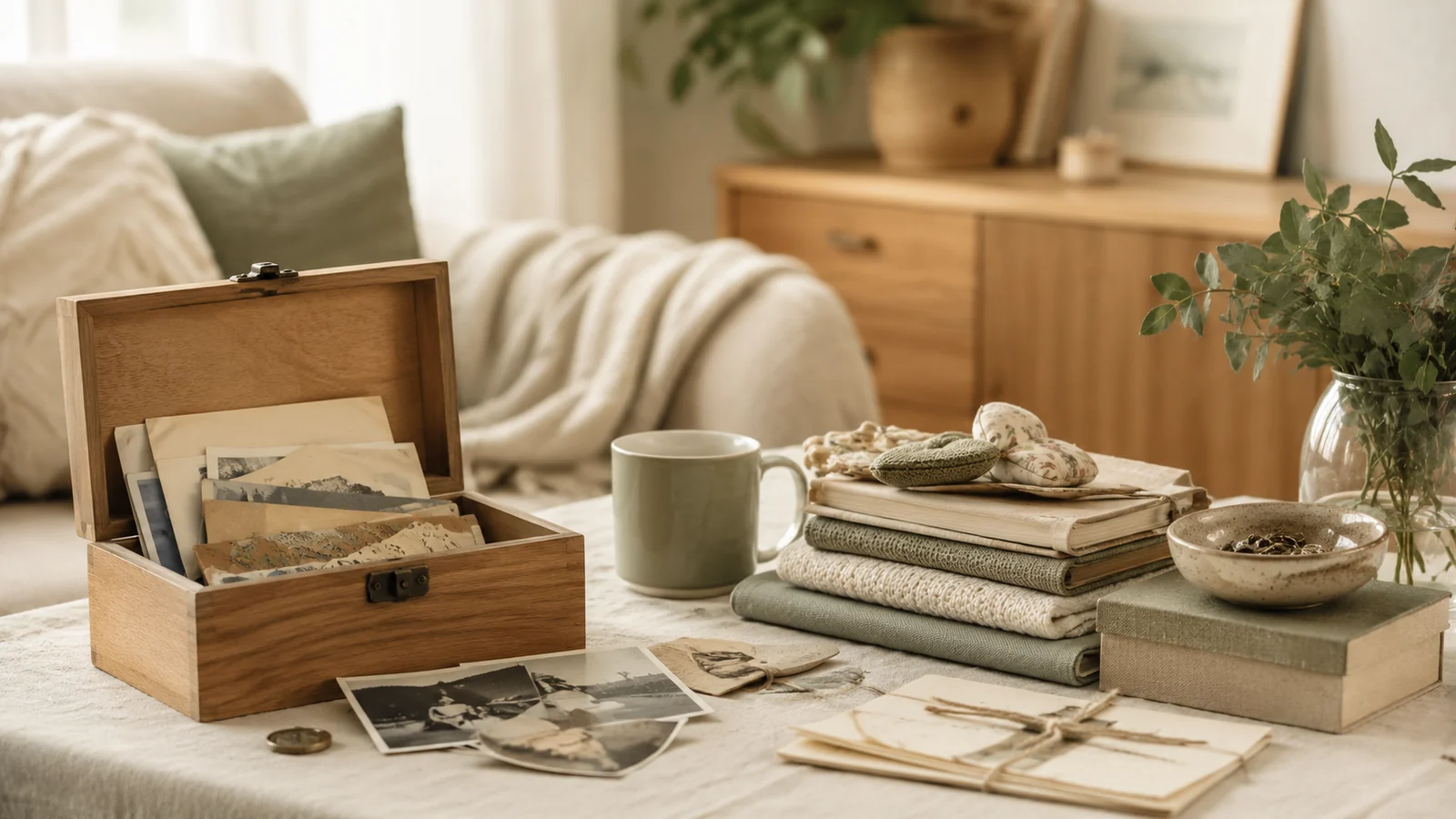
Sentimental decluttering starts with deciding how you want to keep and revisit memories. Choose a manageable group, identify the pieces that carry the strongest meaning and give difficult decisions time without leaving the room covered in boxes.
Match the object to a way of keeping its meaning
| What matters to you | Option to consider | Decision to check |
|---|---|---|
| The physical object itself | Keep it in appropriate storage or display | Can you care for and access it? |
| The story it represents | Record the story alongside a photo | Is the record enough for you personally? |
| A shared family connection | Discuss who would value it | Does anyone else have a claim or wish to keep it? |
| Uncertainty or grief | Set aside a bounded review group | What would make a later decision easier? |
Do Sentimental Items Last
If possible, begin decluttering with easier categories first. Practicing decisions on everyday objects makes it easier to approach emotional belongings later.
Choose a Small Category
Do not empty every memory box at once. Start with one category such as postcards, childhood papers, souvenirs, photographs, or inherited kitchen items.
Ask What the Item Represents
Identify the memory behind the object. Sometimes one representative item can preserve the meaning of an entire collection.
Keep the Best, Not Necessarily All
If you have many similar keepsakes, choose the examples that are most meaningful, attractive, or connected to a specific story.
Create a Defined Memory Container
A box, drawer, album, or shelf gives sentimental belongings a physical boundary. The boundary is not a punishment; it helps you curate what deserves protected space.
Photograph Items When the Memory Matters More Than the Object
For some bulky or fragile items, a photograph may preserve enough of the memory. This is optional—do not use digital copies as a rule if the original object itself is deeply important.
Share Family Items Thoughtfully
If an inherited item may matter to another family member, ask before donating or discarding it. Sharing a meaningful object can be a better outcome than keeping it out of obligation.
Allow an Undecided Category
You do not need to make every emotional decision in one session. Keep a small “decide later” group and set a future review date.
Do Not Measure Love by Quantity
Keeping fewer possessions does not reduce the significance of a relationship or experience. Memories and objects are connected, but they are not the same thing.
Questions That Can Help
- What memory does this represent?
- Would I choose this as the best reminder?
- Can I display, use, or store it with care?
- Am I keeping it from love or from guilt?
- Would someone else value it more?
Close the session gently
Return the items you have chosen to keep and label the small undecided group. Avoid making disposal decisions for another person’s belongings. If you offer an item to someone, make clear that they can decline.
The aim is a collection you can realistically preserve and revisit. Storage capacity can help you set a boundary, but it should not force a rushed choice about an irreplaceable item. Begin the ordinary household categories first if this group feels too difficult today.
Browse more practical Tidy Home Lab guides for this part of your home.
Explore Decluttering →Related Guides