Home Organization Ideas: Fix the Places Where Things Keep Landing
Useful home organization begins where belongings repeatedly pile up: the chair holding coats, the counter holding mail or the drawer that catches every small object. Choose one of these landing places and give its contents an easy route to storage.
Useful home organization begins where belongings repeatedly pile up: the chair holding coats, the counter holding mail or the drawer that catches every small object. Choose one of these landing places and give its contents an easy route to storage.
Match the storage to the reason for the pile
| Repeated pile | Likely friction | Arrangement to try |
|---|---|---|
| Coats on a chair | Hooks or hangers are inconvenient | A reachable coat location beside the usual arrival route |
| Mail on the counter | No place for items needing a decision | One small action tray with a regular review time |
| Loose chargers | Devices charge in several rooms | Keep each frequently used cable at its charging location |
| Items beside a full drawer | The category exceeds its space | Review the category before adding another container |
1. Give Frequently Used Items a Clear Home
Items are easier to put away when there is an obvious place for them. Start with the things that regularly end up on counters, tables, or chairs.
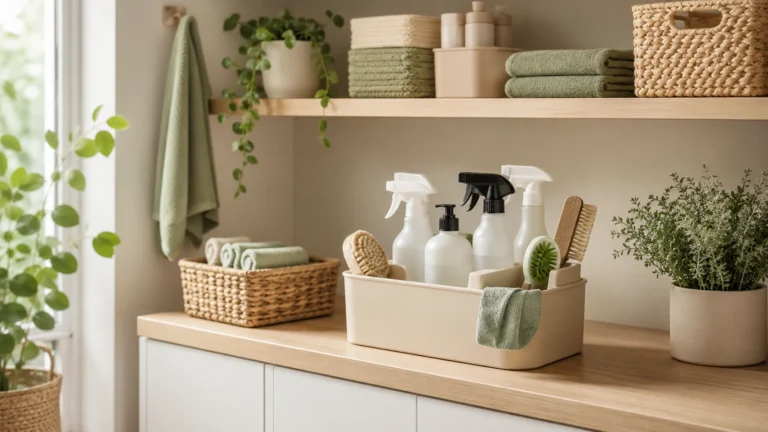
Keys might need a small tray near the door. Charging cables may need one drawer. Everyday cleaning supplies may work better in a caddy close to the rooms where they are used.
2. Store Items Where You Use Them
Convenient storage is easier to maintain than storage that looks perfect but requires extra steps.
If you use an item every day, keep it near the point of use whenever possible. This reduces the temptation to leave it out because returning it is inconvenient.
3. Use Containers to Define Space, Not Create More Stuff
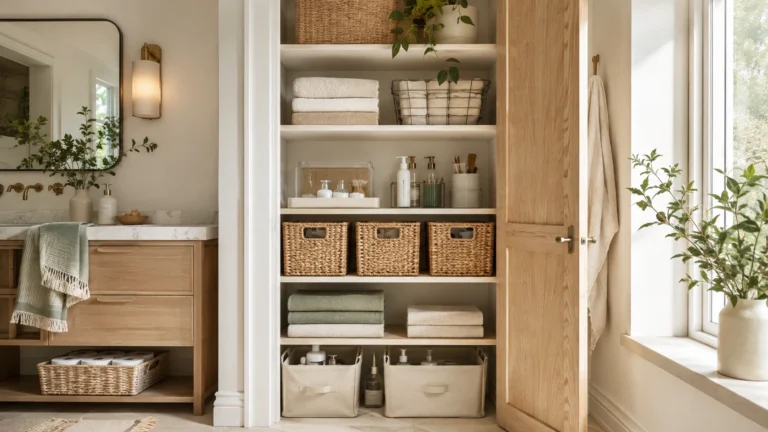
Baskets and bins work best when they create clear limits. A basket can define how many extra towels fit on a shelf or keep similar cleaning products together.
Before buying new containers, measure the space and decide exactly what will go inside. Otherwise storage products can become clutter themselves.
4. Create a Simple Entryway Drop Zone
The entrance to a home often collects shoes, bags, keys, mail, and jackets. A small drop zone can prevent this clutter from spreading.
- A hook for bags or jackets
- A tray for keys
- A basket or rack for shoes
- A designated place for incoming mail
5. Organize Drawers by Category
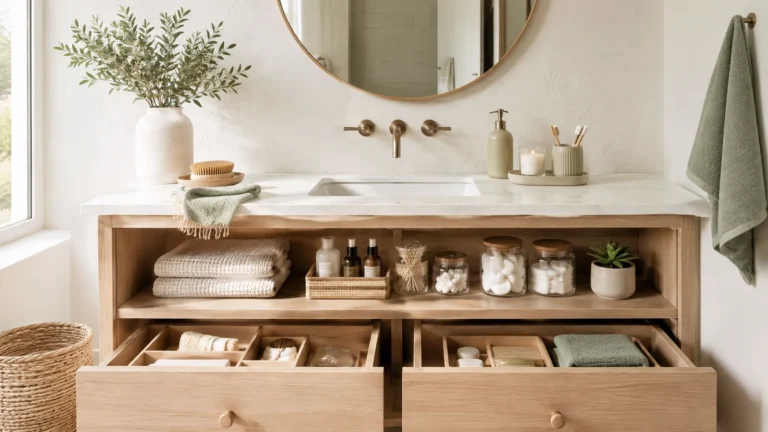
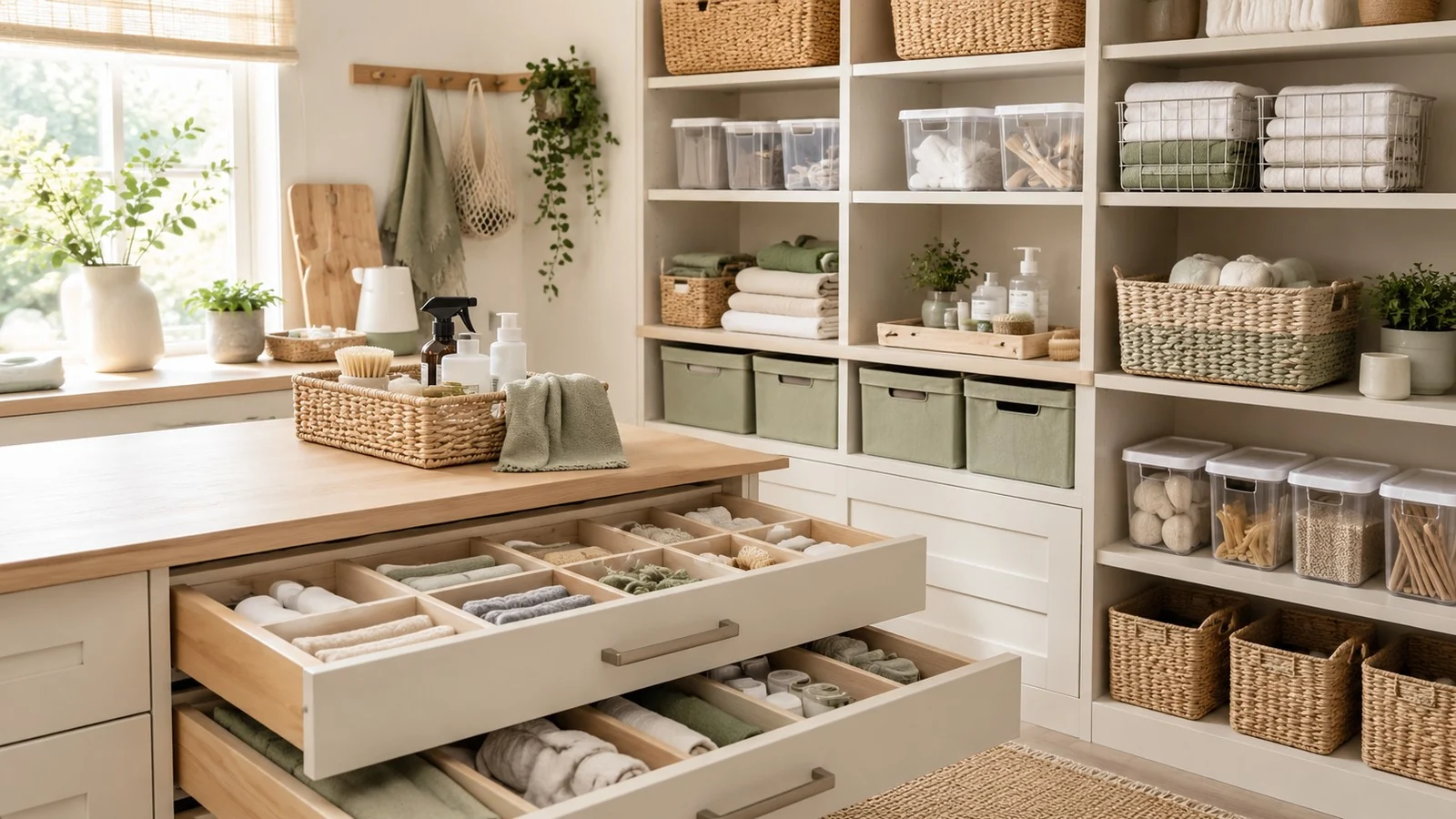
Instead of filling drawers based on whatever fits, group similar items together. This makes it easier to find what you need and notice when you have too many duplicates.
Drawer dividers can help, but small boxes you already own can work just as well.
6. Use Vertical Space
Shelves, hooks, stackable bins, and over-door storage can make use of areas that would otherwise remain empty. This is particularly helpful in small kitchens, bathrooms, and utility spaces.
Avoid filling every vertical surface. The goal is to improve function without making the room feel crowded.
7. Keep Everyday Surfaces Mostly Clear
Kitchen counters, bathroom vanities, dining tables, and desks are easier to clean when only a few useful items remain on them.
Try to keep only the things you use frequently and genuinely want within reach.
8. Build a Simple Paper Routine
Paper clutter grows quickly when every document is treated as something that must be saved.
Create a simple flow: recycle obvious junk immediately, place action items in one location, and file only documents that genuinely need to be kept.
9. Use a One-In, One-Out Rule for Crowded Categories
For categories that tend to expand—mugs, clothes, reusable bags, toys, or decorative items—a one-in, one-out rule can help maintain a reasonable limit.
This does not need to be strict for every possession. Use it where storage is already tight.
10. Schedule Small Resets
Organization is easier to maintain when small problems are corrected before they become large ones.
A five-minute evening reset can include returning items to their homes, clearing a counter, and preparing the main living area for the next day.
How to Start Without Feeling Overwhelmed
Choose one small area that causes frequent frustration. Empty only that space, remove items that do not belong there, group what remains, and return the most useful items in a logical order.
Finish that area before moving to another. Visible progress makes it easier to continue.
Test the return journey
Put a few everyday items away, then retrieve them as you normally would. Check whether a lid, stacked box or crowded shelf makes the return step awkward. A system that looks orderly while empty can still fail during use.
Try the arrangement through ordinary household activity before buying matching bins. Keep the smallest change that makes putting things away easier; use the remaining ideas below only where they solve another identifiable problem.
Browse more practical Tidy Home Lab guides for this part of your home.
Explore Organizing →Related Guides