Remove Common Laundry Stains: Identify the Mark Before Treating It
Stain removal starts with the garment's care instructions and the type of mark. Blot fresh liquid gently, avoid unnecessary heat and choose a treatment labeled for both the stain and the fabric before washing.
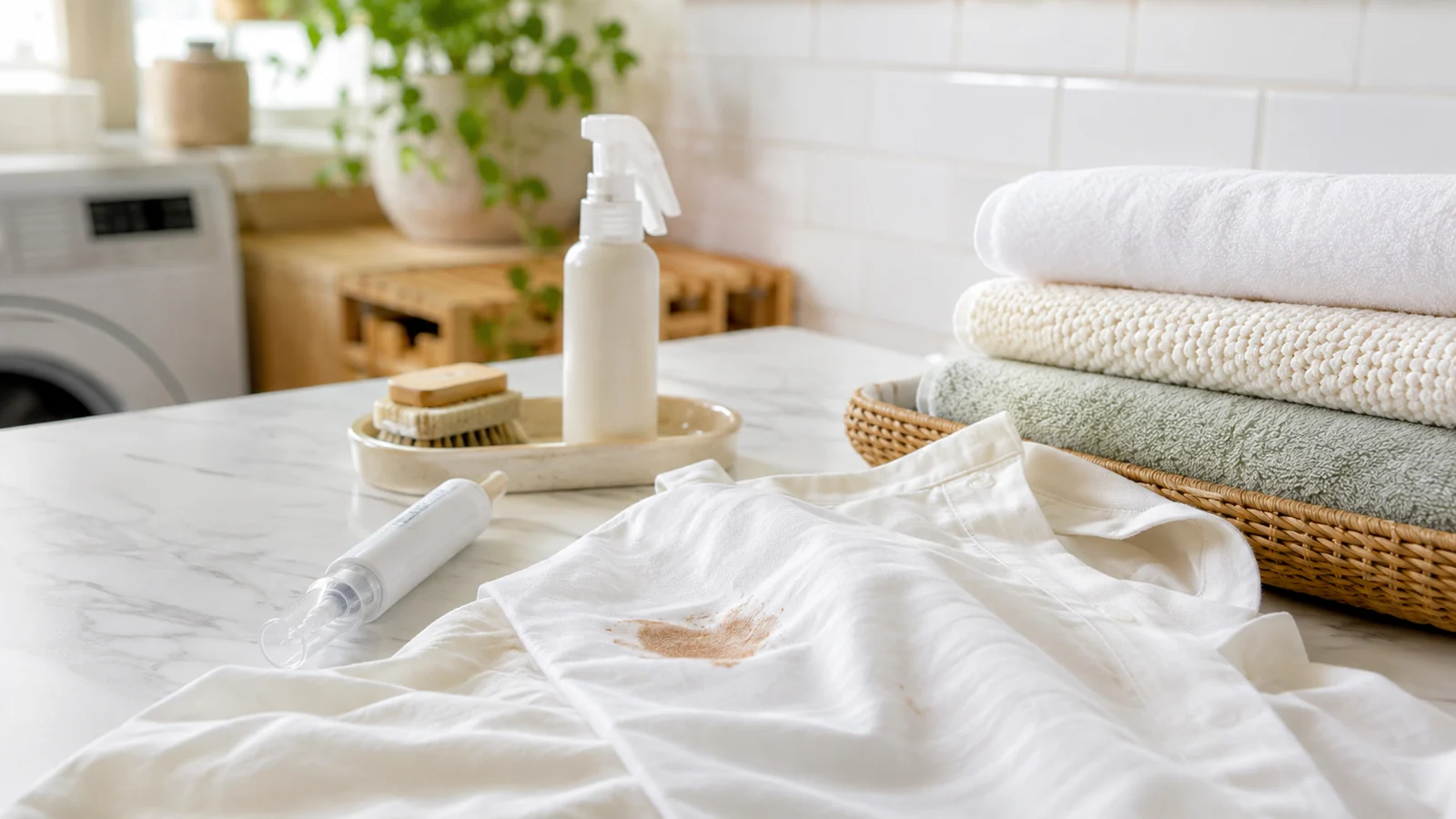
Stain removal starts with the garment’s care instructions and the type of mark. Blot fresh liquid gently, avoid unnecessary heat and choose a treatment labeled for both the stain and the fabric before washing.
Choose the next step from what you know
| Stain situation | Initial decision | Avoid guessing about |
|---|---|---|
| Fresh liquid spill | Blot with a clean suitable cloth | Fabric colorfastness and product compatibility |
| Mud or dry particles | Remove loose material gently as appropriate | Whether brushing will damage the fabric |
| Oily mark | Use a fabric-compatible pretreatment | Strong solvents or homemade combinations |
| Protein-containing stain | Follow a suitable treatment’s temperature guidance | Automatically choosing hot water |
| Unknown mark on a valuable garment | Seek specialist advice | Repeated experiments with several chemicals |
Read the Care Label First
Before treating a stain, check the garment label. Delicate fabrics, special dyes, wool, silk, and dry-clean-only items may require professional care or specific products.
Blot Instead of Rubbing
For a fresh liquid spill, gently blot excess moisture with a clean cloth. Aggressive rubbing can spread the stain or push it deeper into fibers.
Work from the Outside In
When applying an appropriate stain treatment, begin at the outside edge and work toward the center. This can help prevent the stain from spreading.
Common Food and Drink Stains
Remove solid residue gently, then rinse or pretreat according to the fabric care instructions. For washable items, a suitable laundry stain remover or detergent may help before the normal wash cycle.
Grease and Oil
Greasy stains often need a product designed to break down oils. Use only products appropriate for the fabric and follow the label directions. Avoid applying heat until you know the stain has been removed.
Mud and Dirt
Allow heavy mud to dry if that makes it easier to brush away loose soil, then pretreat the remaining mark before washing. Check pockets and shake off outdoor debris before items enter the washer.
Makeup and Personal-Care Products
Cosmetics can contain oils, pigments, and waxes. Blot excess product and use a fabric-safe treatment. Test unfamiliar cleaners in an inconspicuous area first.
Blood and Protein-Based Stains
Follow garment and product instructions carefully. Heat can make some protein stains harder to remove, so avoid automatically using hot water unless the care guidance supports it.
Do Not Dry Until You Check
Before machine drying, inspect the stained area. Dryer heat can set some remaining stains. If the mark is still visible, repeat an appropriate treatment rather than drying immediately.
Keep a Small Stain Kit
- Clean white cloths
- A fabric-appropriate stain treatment
- Laundry detergent
- A soft brush if suitable
- A small basin or sink access
Important Product Safety
Do not mix household cleaning chemicals. Follow product labels, ventilation guidance, and fabric instructions.
When to Use a Professional Cleaner
Consider professional care for valuable garments, delicate fabrics, unknown stains, or items marked dry-clean-only. A home experiment is not worth damaging an irreplaceable item.
Inspect after washing, before committing to heat
Check the marked area in good light. If the stain remains, follow the treatment’s instructions for another appropriate attempt or get professional advice. Do not assume that a second dose of a different chemical is compatible with residue from the first.
Keep notes on what you used if you hand the garment to a cleaner. That history, together with the full care label, is more useful than simply saying the stain is stubborn.
Browse more practical Tidy Home Lab guides for this part of your home.
Explore Laundry →Related Guides