Small Entryway Organization: Build an Arrival and Departure Route
A small entryway can work with very little furniture when each arriving item has a reachable place. Follow the route your household already takes and assign space for shoes, outerwear, bags and the essentials needed at the next departure.
A small entryway can work with very little furniture when each arriving item has a reachable place. Follow the route your household already takes and assign space for shoes, outerwear, bags and the essentials needed at the next departure.
Arrange the route around real use
| Arrival item | Home to consider | Capacity decision |
|---|---|---|
| Daily shoes | A defined, accessible area | Keep only the regularly needed pairs there |
| Coat or outer layer | Suitable reachable hooks or hanging space | Allow the door to open fully |
| Bags | A place that does not block movement | Separate daily bags from rarely used luggage |
| Keys and essentials | An agreed departure point | Everyone knows the same location |
Start with What Actually Lands There
Before adding organizers, notice what tends to collect near the door. Common categories include:
- Shoes
- Keys
- Bags
- Coats
- Pet gear
Your organization system should solve the clutter you actually have.
Use a Small Bench If Space Allows
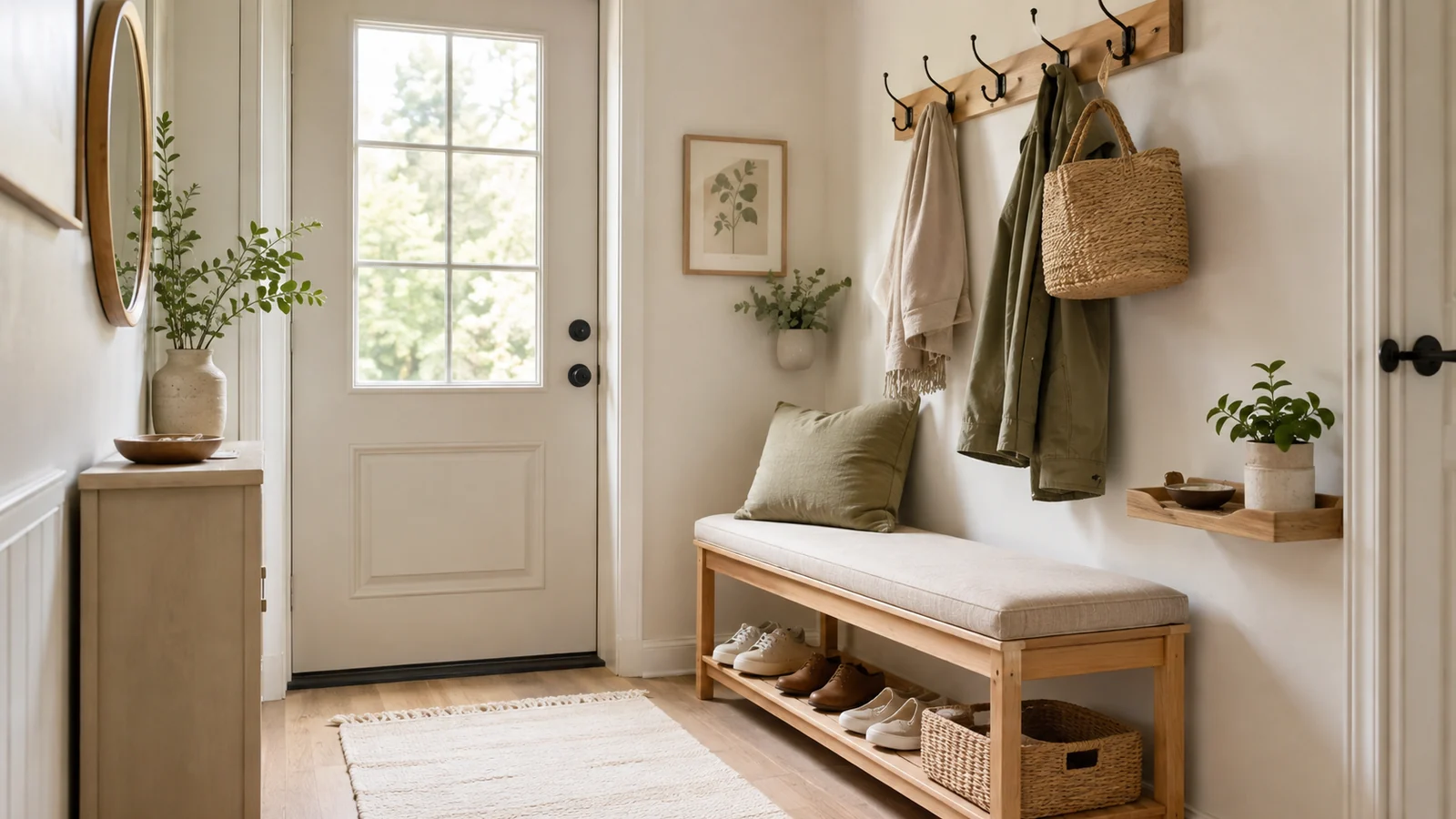
A narrow bench can provide a place to sit while putting on shoes and may offer storage underneath. Choose one that does not block the walking path.
Add Hooks at Useful Heights
Wall hooks can hold coats, bags, hats, or dog leashes without taking up floor space. Avoid installing more hooks than you need because empty hooks often become an excuse to keep too much in the entryway.
Create a Dedicated Shoe Zone
Choose one clear spot for everyday shoes. Options include:
- Low rack
- Bench cubbies
- Basket
- Small cabinet
Seasonal or rarely worn shoes should usually live elsewhere.
Use a Tray for Keys and Small Items
A small tray or bowl on a console table can prevent keys, coins, and earbuds from spreading across the surface.
Control Incoming Paper
Mail is one of the fastest ways to create entryway clutter. Decide where incoming paper goes immediately. A small wall file or tray can work if you process it regularly.
Make Bags Easy to Put Away
If bags are always left on the floor, the storage spot may be too inconvenient. Use a sturdy hook, basket, or dedicated shelf close to the door.
Use Vertical Space
Small entryways benefit from vertical storage. A wall-mounted shelf above hooks can hold baskets for less-frequent items, while keeping the floor clearer.
Keep the Floor as Open as Possible
Open floor space makes a small entryway feel calmer and easier to clean. Try to avoid lining the walls with multiple baskets, racks, and furniture pieces.
What to Store Somewhere Else
The entryway should mainly hold things used for leaving or entering the home. Move these elsewhere when possible:
- Large seasonal collections
- Extra household supplies
- Old mail
- Rarely used shoes
- Unrelated storage bins
A Two-Minute Entryway Reset
At the end of the day:
- Put shoes in their spot.
- Hang bags and coats.
- Move mail out of the landing area.
- Return keys to their tray or hook.
- Remove anything that belongs in another room.
Test with a real departure
Put the usual belongings away and leave for an ordinary outing. Notice what requires moving other items or searching through a pile. Make the return step equally easy, especially for the household members who use the space most.
Avoid storing valuables where their visibility or access creates a security problem. Keep electrical panels, doors and walking routes clear. If you need wall-mounted storage, check the appropriate fittings and permission for your home rather than assuming every surface can carry the load.
Browse more practical Tidy Home Lab guides for this part of your home.
Explore Organizing →Related Guides