Clean a Mattress with Minimal Moisture and a Complete Drying Plan
Mattress cleaning should begin with its care instructions and an honest drying plan. Vacuum accessible debris using an allowed attachment, treat only suitable surface marks and keep moisture from soaking into the interior.
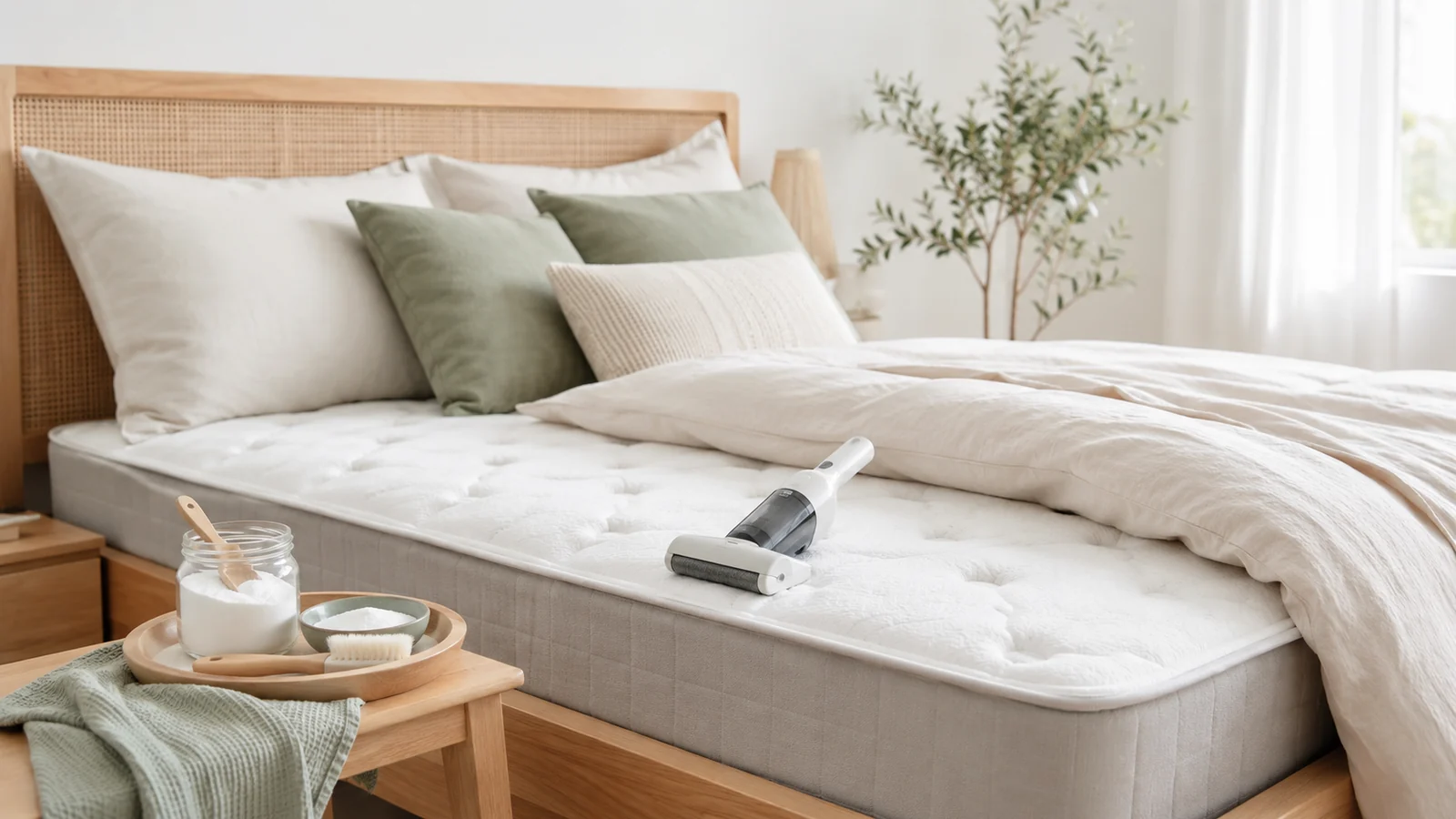
Mattress cleaning should begin with its care instructions and an honest drying plan. Vacuum accessible debris using an allowed attachment, treat only suitable surface marks and keep moisture from soaking into the interior.
Match the problem to the least invasive suitable action
| Problem | Initial check | Decision |
|---|---|---|
| Loose dust or debris | Approved vacuuming method | Work over the accessible surfaces |
| A small fresh spill | Material and spot-cleaning instructions | Blot carefully and use only permitted treatment |
| Persistent odor or interior dampness | Whether the mattress can dry and be cleaned effectively | Ask the manufacturer or a qualified specialist |
| Mold, major contamination or damaged filling | Scope and condition of the mattress | Seek appropriate advice before routine cleaning |
Step 1: Strip the Bed
Remove sheets, pillowcases, mattress protectors, and washable covers. Launder each item according to its care label.
Step 2: Vacuum the Surface
Use a clean upholstery attachment and slowly vacuum the top, seams, piping, and accessible sides. Pay extra attention to creases where lint and dust collect.
Step 3: Inspect for Spots
Look for small stains or areas that need attention. Treat only the affected area rather than soaking a large section of the mattress.
Step 4: Spot-Clean Carefully
Use a cleaning method approved for the mattress material. Apply product to a cloth when possible instead of pouring liquid directly onto the mattress. Blot rather than aggressively scrubbing.
Avoid saturating foam or padding. Excess moisture can take a long time to dry and may create odor or material problems.
Step 5: Remove Excess Moisture
Press a clean, dry towel onto the treated area to absorb moisture. Replace the towel as needed until the surface is only slightly damp.
Step 6: Allow the Mattress to Dry Completely
Good airflow is essential. Open windows when conditions are suitable, use normal room ventilation, and leave the bed uncovered until the mattress is completely dry.
What About Baking Soda?
Use a powder or any other odor treatment only if the mattress instructions expressly permit it. Follow the removal guidance and avoid adding products when the mattress cannot be cleaned and dried as specified.
Rotate the Mattress If Recommended
Some mattresses are designed to be rotated periodically; others are not. Follow the manufacturer’s recommendation instead of assuming every mattress should be flipped or rotated.
Use a Washable Mattress Protector
A protector can help reduce the amount of sweat, spills, dust, and everyday debris that reaches the mattress itself. Wash the protector according to its label.
How Often Should You Clean a Mattress?
There is no universal schedule. Vacuuming during seasonal bedroom cleaning and dealing with spills promptly is usually more practical than waiting for a specific date.
Keep the Whole Bedroom Easier to Maintain
A clean mattress works best as part of a simple bedroom system. Pair this routine with our guide on decluttering a bedroom without getting overwhelmed and keep floors, bedding, and bedside surfaces on a realistic rhythm.
Decide when the bed can return to use
Plan where bedding will stay while the mattress dries. A surface that feels dry does not prove that an interior wet area is ready to cover. Avoid adding further moisture when you cannot establish an appropriate drying process.
Use a compatible washable protector to make ordinary bedding care easier. Powder, fragrance or an improvised mixture should not substitute for the mattress manufacturer’s method. If the spill or odor exceeds normal surface care, stop before making the problem harder to assess.
Browse more practical Tidy Home Lab guides for this part of your home.
Explore Cleaning →Related Guides