Clean Window Tracks: Vacuum Dry Debris, Wipe Carefully and Check Drainage
Window-track cleaning works best in a dry-first sequence. Remove loose grit before wiping so it does not become a muddy paste, and check the window manufacturer's guidance for seals, hardware and drainage openings.
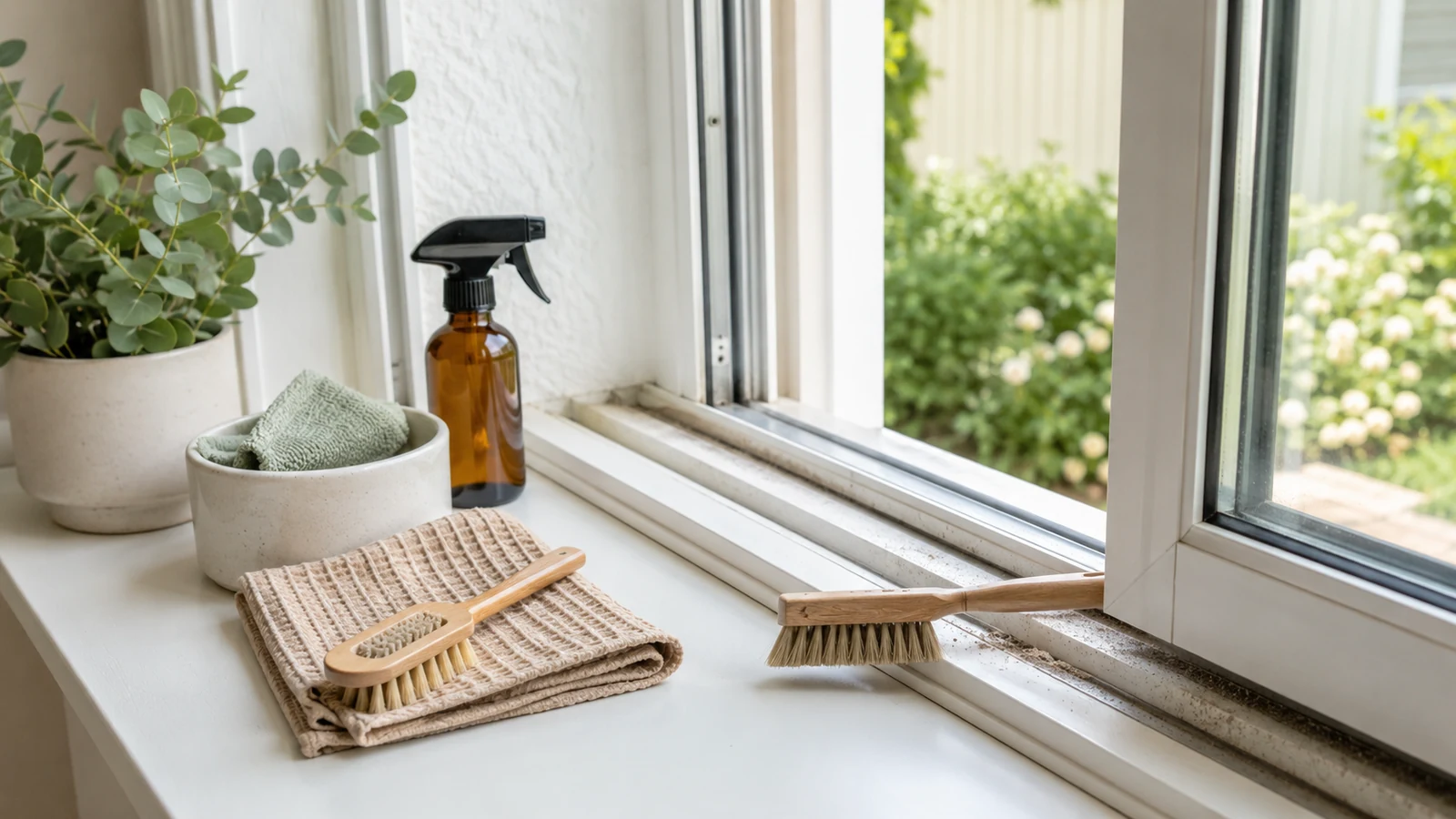
Window-track cleaning works best in a dry-first sequence. Remove loose grit before wiping so it does not become a muddy paste, and check the window manufacturer’s guidance for seals, hardware and drainage openings.
Choose the action from the material in the track
| Track condition | First step | Important limit |
|---|---|---|
| Loose dirt and insects | Vacuum or gently lift dry debris | Protect seals and finished surfaces |
| Packed dust in a corner | Use a soft compatible brush | Avoid scraping with a sharp tool |
| Ordinary grime | Lightly damp wiping with an allowed cleaner | Do not flood hardware or wall cavities |
| Standing water or repeat staining | Record the location and conditions | Review the window’s drainage or service guidance |
What You Need
- Vacuum with a narrow attachment
- Soft brush or old toothbrush
- Microfiber cloths
- Warm water
- Mild cleaner appropriate for the frame material
Step 1: Open the Window Safely
Make sure the window is stable and accessible. Follow the manufacturer’s guidance for removable screens or sash components.
Step 2: Vacuum Loose Debris
Remove as much dry dirt as possible before wiping. This prevents dust from turning into mud inside the track.
Step 3: Brush the Corners
Use a soft brush to loosen packed debris from corners and grooves, then vacuum again.
Step 4: Wipe with a Damp Cloth
Use a lightly damp microfiber cloth with a mild compatible cleaner. Avoid flooding the track or letting water run into wall cavities or hardware.
Step 5: Detail Narrow Grooves
Wrap a cloth around a small blunt tool or use a cotton swab for tight areas, taking care not to damage seals or finishes.
Step 6: Dry the Track
Wipe away remaining moisture before closing the window.
Leave designed openings clear
Some windows include drainage features. Identify them from the manual rather than covering or sealing a gap because it looks untidy. Routine cleaning should leave those features working as intended.
Dry the accessible track before closing the window and check that it moves normally. Work only where the sash and screen can be handled safely. If water repeatedly collects, use a dated observation for the manufacturer, property manager or service professional instead of relying on another wipe-down.
Browse more practical Tidy Home Lab guides for this part of your home.
Explore Cleaning →Related Guides