How to Clean Your House Fast: Pick a Route and Finish the Useful Jobs
Fast house cleaning starts with a choice: which rooms must work better when you finish? Pick the kitchen, the bathroom and the spaces people will actually use, then follow one route through them. The aim is cleared working surfaces and removed dirt within the time available.
Fast house cleaning starts with a choice: which rooms must work better when you finish? Pick the kitchen, the bathroom and the spaces people will actually use, then follow one route through them. The aim is cleared working surfaces and removed dirt within the time available.
Set the route before opening the cleaning cupboard
| Your starting point | First useful job | Leave for a separate session |
|---|---|---|
| Guests are arriving | Clear the entry, seating and bathroom | Bedroom drawers and hidden storage |
| Dinner preparation is blocked | Put away food and clear one preparation surface | Pantry reorganization |
| Dust and crumbs are widespread | Clear surfaces, dust higher areas, then clean floors | Sorting keepsakes |
| The house is crowded with possessions | Move obvious misplaced items to their homes | A full decluttering project |
Before You Start: Gather a Small Cleaning Kit
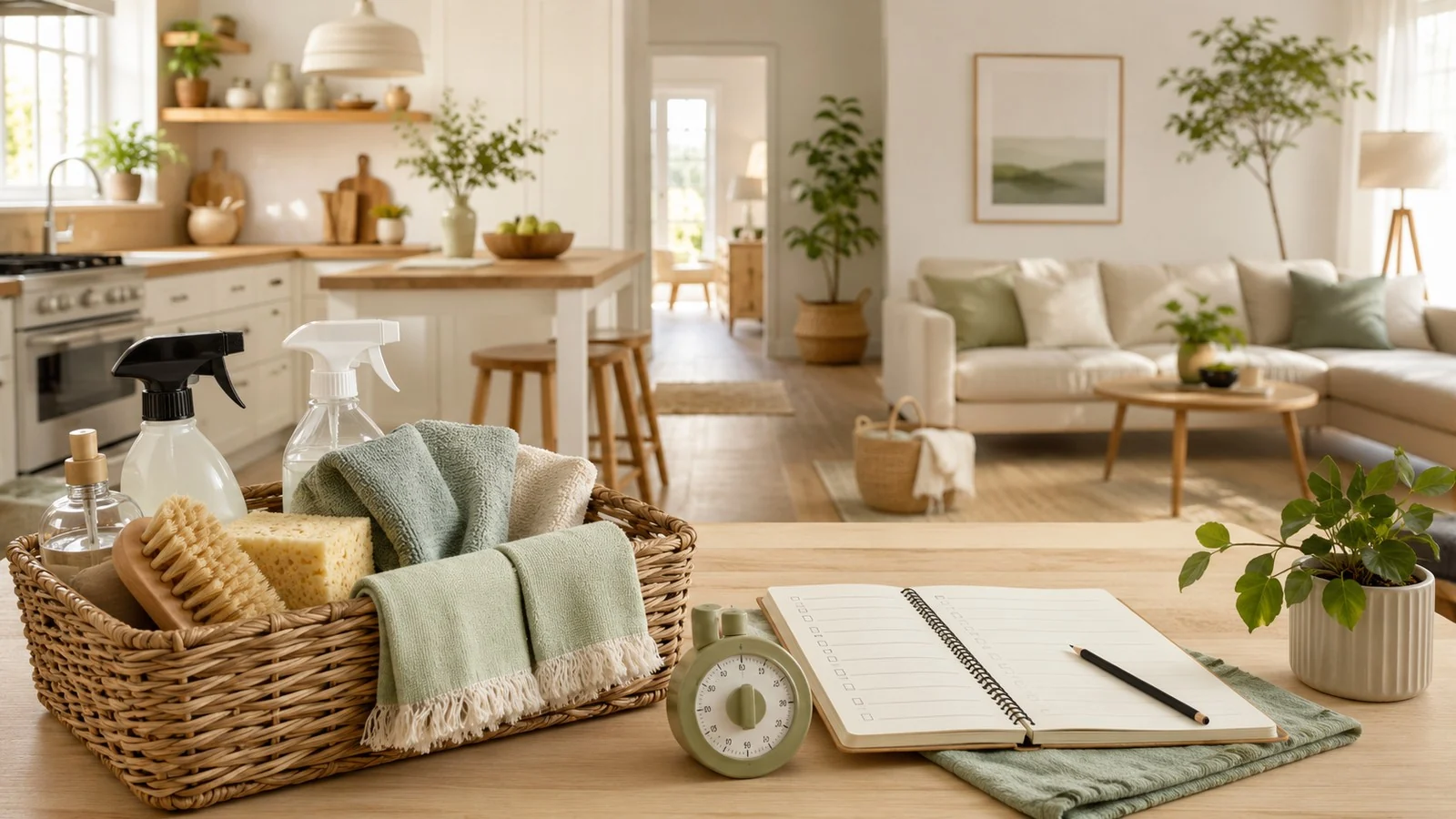
Walking back and forth for supplies wastes more time than most people realize. Before you begin, gather the basics in one basket or caddy.
- Microfiber cloths
- All-purpose cleaner
- Glass cleaner
- Trash bags
- Vacuum or broom
- Mop, if needed
- A small basket for items that belong in other rooms
Use products that are appropriate for the surfaces in your home and always follow the manufacturer’s directions. If you are unsure whether a cleaner is safe for a material, test it in an inconspicuous area first.
The Best Order for Cleaning a House Quickly
A simple cleaning order prevents you from repeating work. In most homes, the following sequence works well:
- Remove obvious trash.
- Collect items that are out of place.
- Dust and wipe higher surfaces.
- Clean counters and frequently touched areas.
- Vacuum or sweep.
- Mop hard floors last.
The key principle is to work from top to bottom and leave the floors until the end. Dust and crumbs that fall while you clean will be removed during the final floor pass.
Step 1: Do a 10-Minute Whole-Home Reset
Before deep cleaning any room, walk through the house with a trash bag and a small basket. Throw away obvious trash and place misplaced items in the basket.
Do not stop to organize drawers or closets. The goal is simply to clear visible surfaces so cleaning becomes easier.
If something belongs in another room, either put it there immediately if it takes only a few seconds or place it in the basket and redistribute everything later.
Step 2: Clean the Kitchen
The kitchen usually benefits from a clear sequence because it contains several different surfaces.
Clear the counters
Put away food, dishes, appliances, and anything else that does not need to stay on the counter. A mostly clear counter can make the entire kitchen look cleaner before you have even wiped anything.
Load or wash the dishes
Start the dishwasher if you use one. If you wash dishes by hand, fill the sink and let heavily soiled items soak while you clean the rest of the room.
Wipe surfaces
Clean the counters, stovetop, table, appliance handles, and other frequently touched surfaces. Work from the cleaner areas toward the messier areas so you do not spread grease or crumbs.
Finish with the floor
Sweep or vacuum first. Mop only after the rest of the kitchen is finished.
Step 3: Reset the Living Room
Living rooms often look messy because of many small items rather than actual dirt. Start by restoring order.
- Fold throws.
- Arrange cushions.
- Return remotes and books to their usual places.
- Clear cups, plates, and wrappers.
- Dust obvious surfaces.
Wipe coffee tables, side tables, and frequently touched areas. Vacuum upholstery if it needs attention, then vacuum or sweep the floor.
When time is limited, focus on the areas that are most visible from the entrance to the room.
Step 4: Clean the Bathroom Efficiently
Bathrooms can be cleaned quickly when the cleaner is allowed a little contact time.
Use one appropriate product at a time on its intended surface. Follow its labeled contact time, rinsing and ventilation directions. Keep toilet tools separate from sink and mirror cloths, and do not mix cleaning chemicals.
Then clean the sink and counter, wipe fixtures, clean the toilet, and finish with the shower or tub as needed.
Vacuum or sweep the floor before mopping. Replace towels if necessary and make sure the room has good ventilation while using cleaning products.
Step 5: Make the Bedrooms Look Calm Again
A made bed has a large visual impact, so start there.
Next, clear bedside tables and dressers, collect laundry, and return visible items to their usual places. Dust the most noticeable surfaces and then vacuum or sweep the floor.
If you are short on time, avoid opening drawers or starting a closet organization project. Save those jobs for a dedicated organizing session.
Step 6: Do the Floors Last
Once all rooms have been reset and surfaces have been cleaned, finish with the floors.
Vacuum carpeted areas and rugs. Sweep or vacuum hard floors before mopping them. Working through the home in one continuous route is usually faster than cleaning the floor separately in every room.
A 60-Minute Example Cleaning Schedule
If your home needs a quick reset rather than a deep clean, try this approximate schedule:
- 10 minutes: whole-home pickup and trash
- 15 minutes: kitchen
- 10 minutes: living room
- 10 minutes: bathroom
- 10 minutes: bedrooms
- 5 minutes: final floor and finishing pass
The exact timing will depend on the size and condition of your home, so treat this as a flexible framework rather than a strict rule.
What to Skip When You Are in a Hurry
Fast cleaning works best when you separate routine cleaning from deeper maintenance tasks. Unless they are urgently needed, save these jobs for another day:
- Cleaning inside the oven
- Washing windows
- Organizing closets
- Sorting paperwork
- Cleaning behind large furniture
- Deep-cleaning grout
These tasks matter, but adding them to a quick cleaning session can make the entire routine feel impossible.
Small Habits That Make Future Cleaning Faster
The fastest cleaning routine is the one that starts with less mess. A few small habits can make a significant difference:
- Reset the kitchen after dinner.
- Put items away when leaving a room.
- Keep cleaning supplies close to where you use them.
- Do one load of laundry before the hamper overflows.
- Wipe bathroom counters regularly instead of waiting for buildup.
- Spend five minutes each evening clearing the main living area.
Frequently Asked Questions
Should I dust or vacuum first?
Dust first and vacuum afterward. Dust and small debris may fall to the floor while you clean surfaces.
Which room should I clean first?
Start with the room that will make the biggest practical difference. For many households, that is the kitchen. If guests are coming, you may prefer to begin with the entryway, living room, and bathroom.
How can I clean faster without doing a poor job?
Use a consistent order, carry your supplies with you, avoid switching between unrelated tasks, and focus on high-use and high-visibility areas first.
Finish each room with a handover check
Before leaving a room, take out its trash, return the cleaning products to safe storage and put away the collection basket. A basket left in a corner simply transfers the next job. If time runs out, finish the current surface and make the walking route safe before stopping.
Treat the example timings below as a planning budget. They will vary with room size, mobility, pets and the amount of mess. Product contact times remain the times on the label even when the cleaning session is short.
Sources and further guidance
Browse more practical Tidy Home Lab guides for this part of your home.
Explore Cleaning →Related Guides