Organize Cleaning Supplies by Task, Safe Storage and Realistic Quantity
Cleaning supplies are easier to manage when the products you use for a task are identifiable and stored according to their labels. Review the supplies before grouping them, then keep each product in its original container.
Cleaning supplies are easier to manage when the products you use for a task are identifiable and stored according to their labels. Review the supplies before grouping them, then keep each product in its original container.
Build a task group from products you actually use
| Task | Grouping decision | Safety check |
|---|---|---|
| Routine surface cleaning | Keep the compatible everyday product and tools together | The product suits the actual material |
| Bathroom care | Identify tools used only for their intended area | Avoid transferring dirty tools to food surfaces |
| Laundry | Keep laundry products in appropriate storage | Children and pets cannot access them |
| Occasional specialist task | Store clearly labeled supplies separately | Instructions and original packaging remain available |
Start by Gathering One Storage Area
You do not need to empty every cleaning product in the house at once. Start with the main cabinet, closet, or utility shelf where most supplies live.
Remove Empty and Unused Products
Check for empty containers, dried-out wipes, broken tools, and products you no longer use. Follow local disposal guidance and product labels when discarding chemicals.
Create Simple Cleaning Categories
- Everyday surface cleaning
- Bathroom supplies
- Kitchen supplies
- Floor care
- Laundry-related cleaners
- Brushes, cloths, and gloves
Use a Portable Caddy for Everyday Supplies
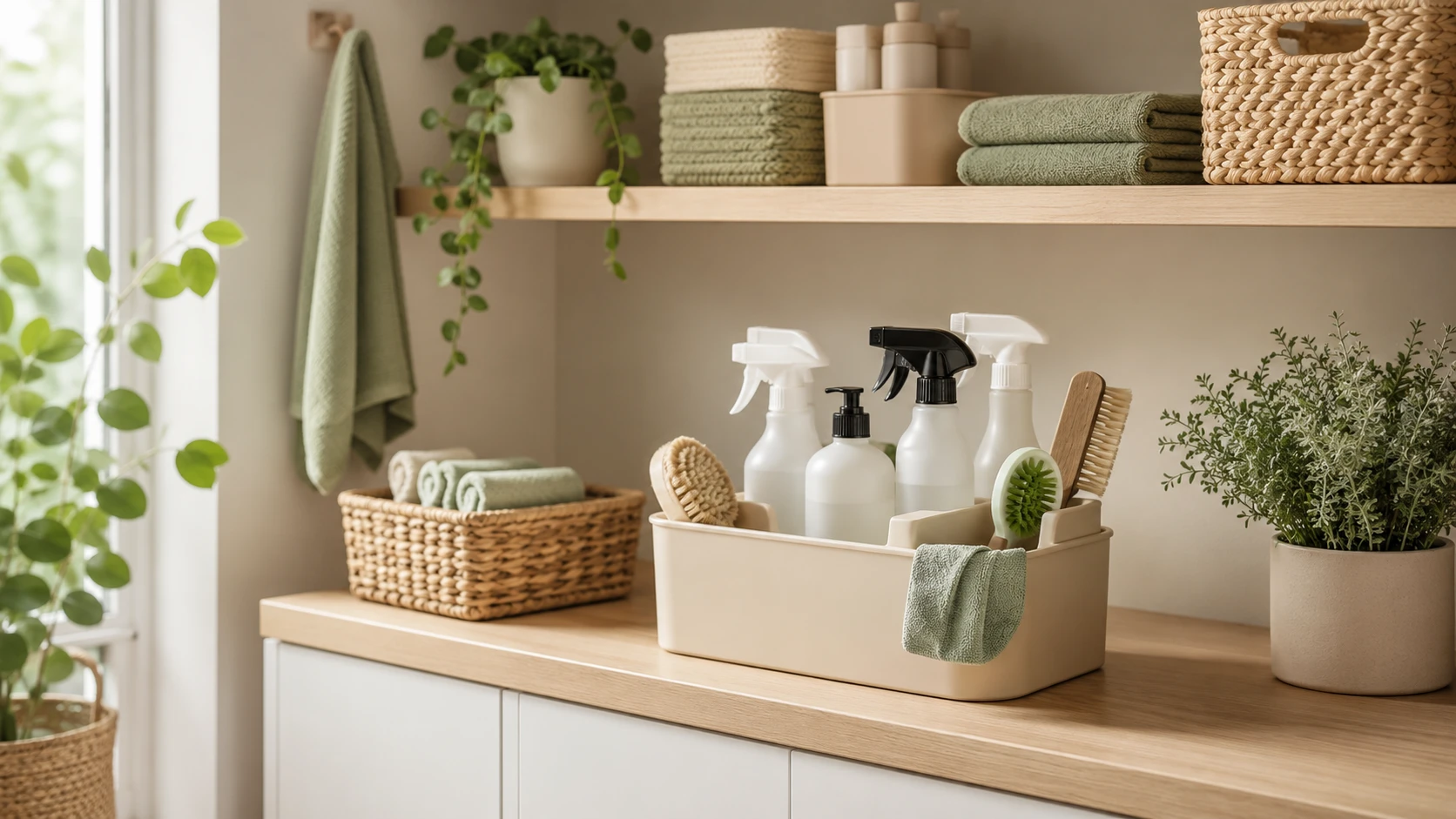
A small caddy can hold a few products used throughout the home, such as microfiber cloths and appropriate general-purpose cleaners. Carrying one caddy is easier than walking back and forth for supplies.
Keep Backups Together
Store unopened refills in one defined area rather than mixing them with the products currently in use. This makes it easier to see what you actually have before buying more.
Store Cleaning Cloths Separately
Clean microfiber cloths and scrubbers should have a dry, ventilated storage area. Used or damp cloths should be washed and dried before returning to the supply cabinet.
Prioritize Safety
Follow product safety instructions, especially if children or pets can access the storage area. Never transfer cleaners into unmarked food or beverage containers, and never mix cleaning chemicals.
Do Not Over-Organize
You do not need matching containers for every bottle. The goal is faster cleaning and safer storage. A few broad bins or a caddy are usually enough.
A Monthly Supply Check
- Return misplaced products.
- Remove empty containers.
- Check which refills are genuinely needed.
- Wash the caddy or bin if necessary.
- Make sure labels remain readable.
For cabinet storage, the same principles used in our under-sink organization guide also work well.
Give backups a visible limit
Check the quantity you already own before buying another product. A portable caddy can help with the working set, but its contents still need safe storage afterward. Avoid combining partly used products or pouring them into unmarked decorative bottles.
Separate leaks, damaged containers and unidentified products for appropriate guidance. Follow the label and local disposal requirements. Organizing is complete when products can be retrieved safely, returned securely and recognized without guessing what a container holds.
Browse more practical Tidy Home Lab guides for this part of your home.
Explore Organizing →Related Guides