Declutter Storage Bins with an Inventory and a Clear Review Decision
Storage bins become useful again when you know what each one contains and why the contents are being kept. Open one bin at a time, compare it with its label and decide where the retained group belongs.
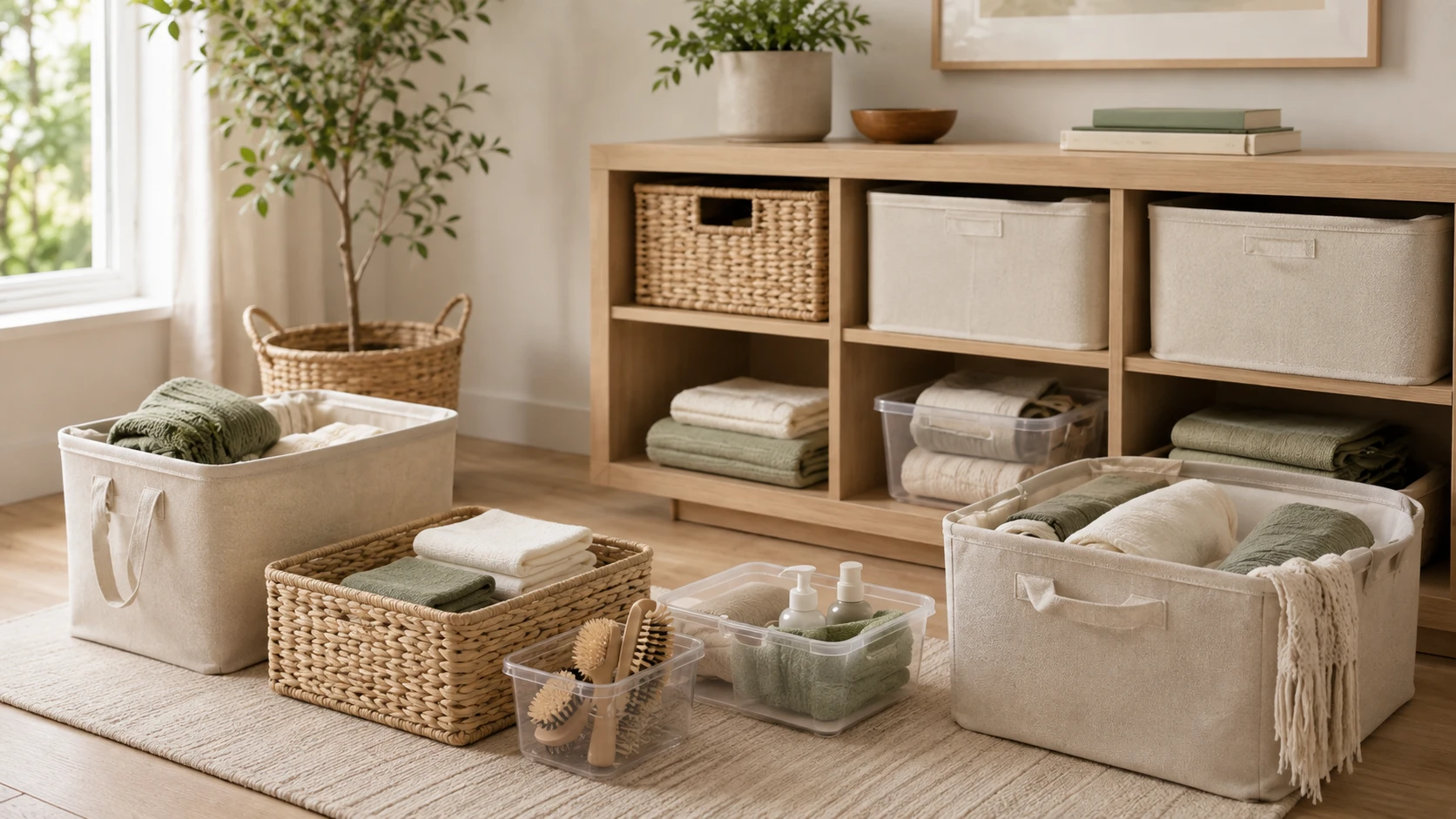
Storage bins become useful again when you know what each one contains and why the contents are being kept. Open one bin at a time, compare it with its label and decide where the retained group belongs.
Write a four-line bin record
- Category: what the contents are, in ordinary words.
- Intended use: when or why you expect to need them.
- Location: where the bin will live after this session.
- Next action: a specific repair, handover or later decision for anything unresolved.
This record makes duplicates and forgotten categories easier to identify without spreading every bin across the room at once.
Choose One Bin Only
Start with a container that is easy to access and not highly emotional. Avoid beginning with family keepsakes if you are trying to build momentum.
Create Four Decision Areas
- Keep in this bin
- Move somewhere else
- Donate or give away
- Discard or recycle appropriately
Empty the Bin onto a Small Surface
Use a table, rug, or defined section of the floor. Limiting the sorting area prevents the project from spreading throughout the room.
Ask Why the Item Is Stored
Is it seasonal, sentimental, a genuine backup, or simply something you did not know how to deal with? The reason for storage helps determine whether the item still deserves space.
Reduce Duplicate Categories
Multiple bins of the same category are a sign that the category may need a limit. Combine like items, keep the best or most useful, and set a realistic container boundary.
Label the Final Category Clearly
Labels should describe what is actually inside, such as “winter bedding” or “holiday lights,” rather than vague terms like “miscellaneous.”
Do Not Create a Permanent Maybe Bin
A small temporary decision box can help with difficult items, but give it a review date. Otherwise, it simply becomes another storage bin.
Finish Before Opening the Next Bin
Put the kept items away, remove donations from the room, and dispose of unwanted materials appropriately. Only then open another container.
A One-Bin-a-Week Routine
If the storage area is large, one bin per week is enough. Slow, complete progress is usually more sustainable than a weekend project that creates a larger mess.
Decide whether the category still needs storage
Seasonal or occasional items can have a clear use even when they are not needed this week. A vague future possibility deserves a closer decision, particularly when the bin blocks access or requires unsuitable storage conditions.
Return only dry, appropriately protected items and use containers suitable for their contents. Keep hazardous products and important records outside an ordinary mixed-bin decision. Label the retained group clearly, close the bin and remove its outgoing items before starting another.
Browse more practical Tidy Home Lab guides for this part of your home.
Explore Decluttering →Related Guides